“What should you do if someone’s face suddenly droops, their arm becomes weak, or their speech turns slurred?” This was one of the key questions that community members learned to answer at Chung Wah Community Care’s (CWCC) recent health education sessions.
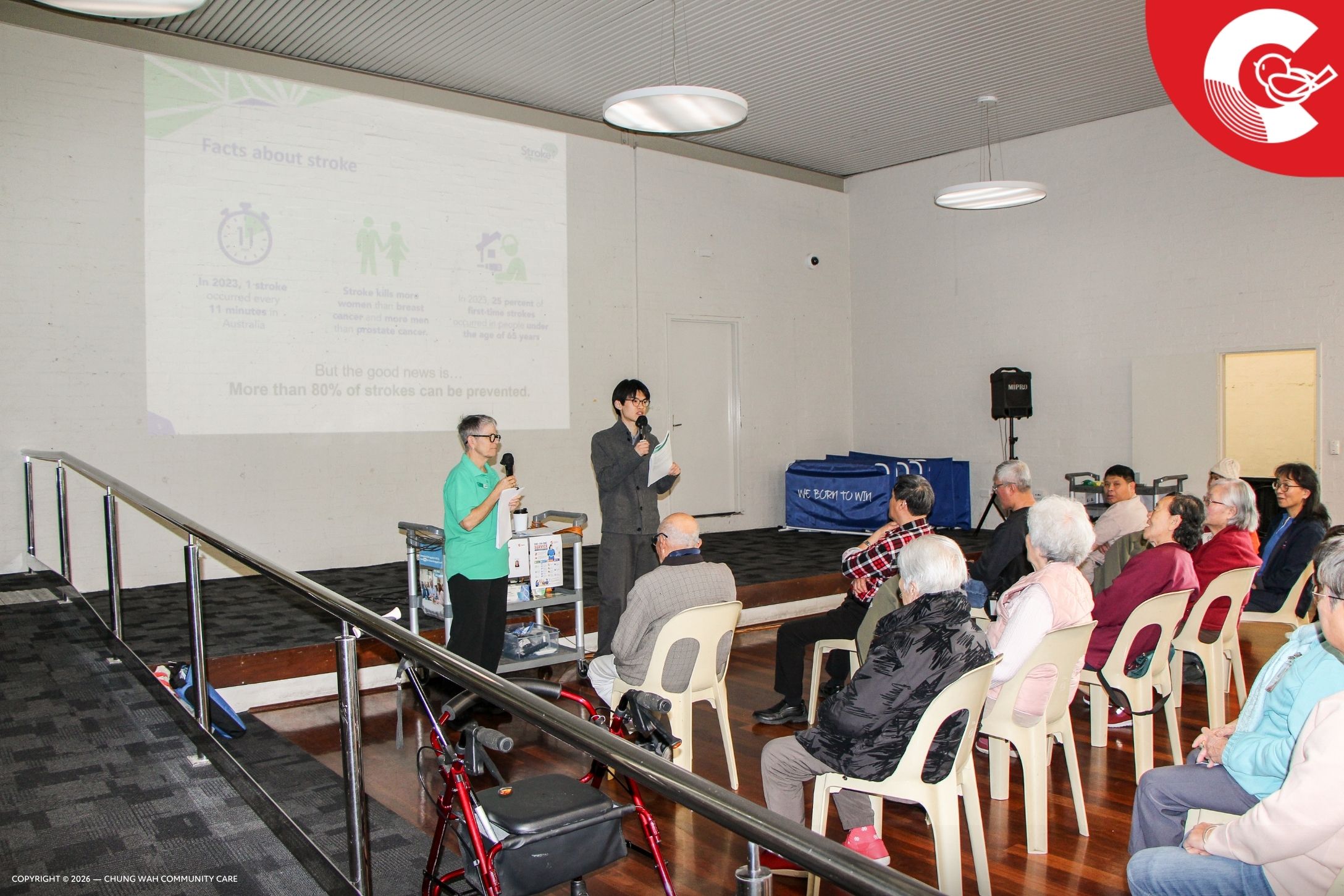
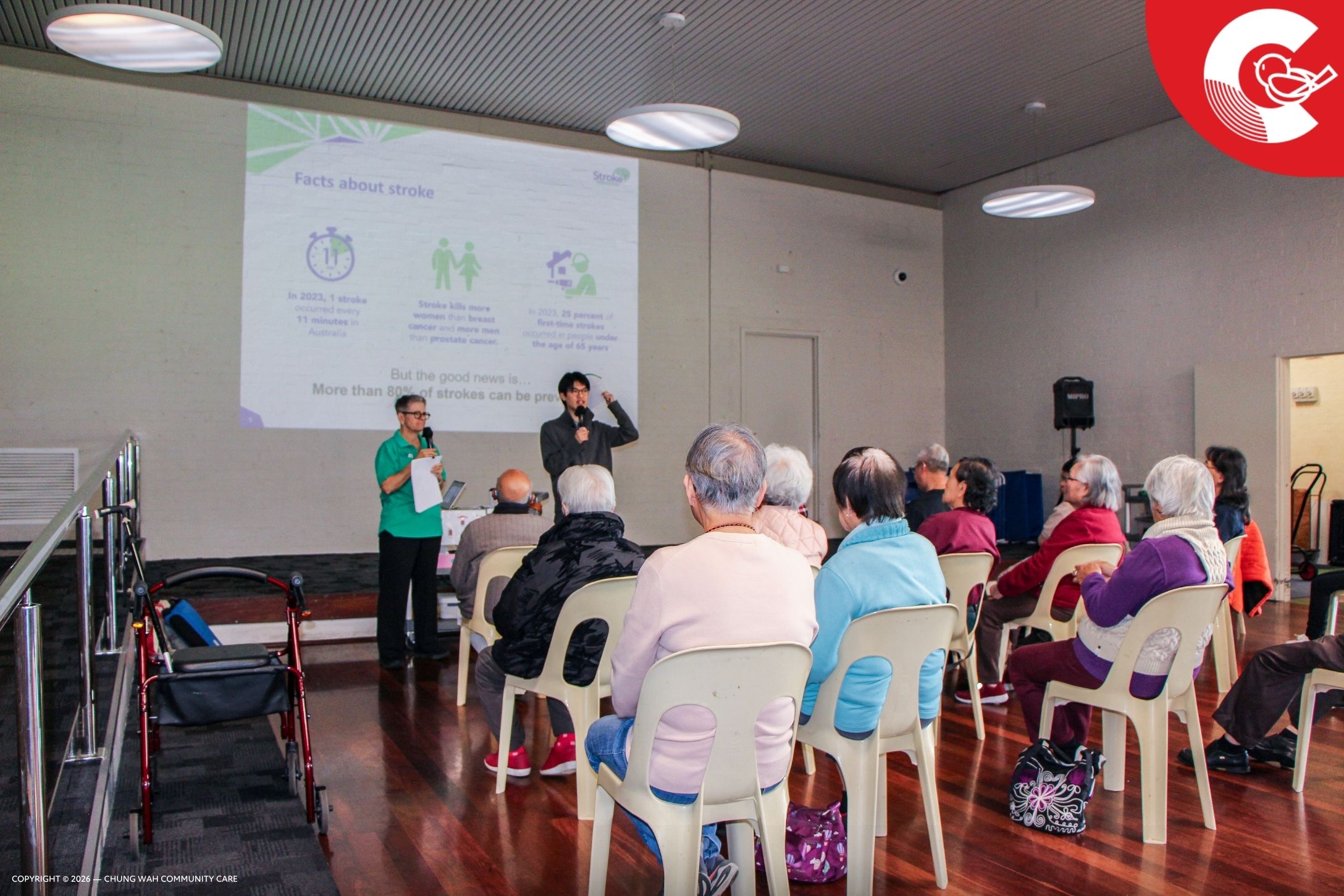
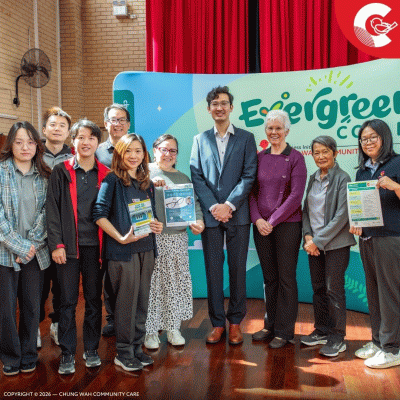
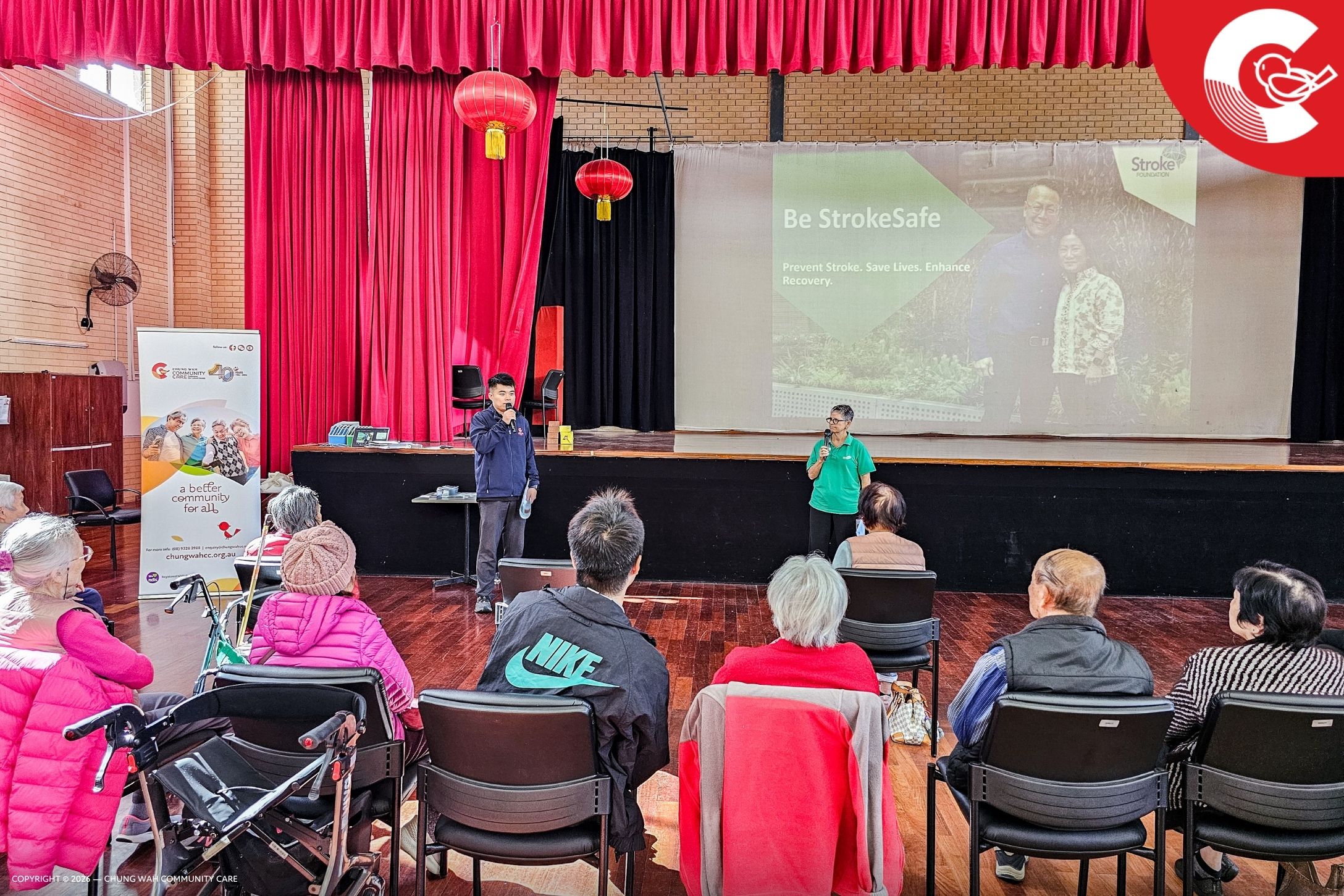
During National Stroke Week 2026, CWCC held stroke prevention seminars at the Balcatta Community Hub on 4 August and the Willetton Community Hub on 6 August. These sessions helped people understand stroke risks, spot the warning signs, and most importantly, learn how to act quickly in an emergency.
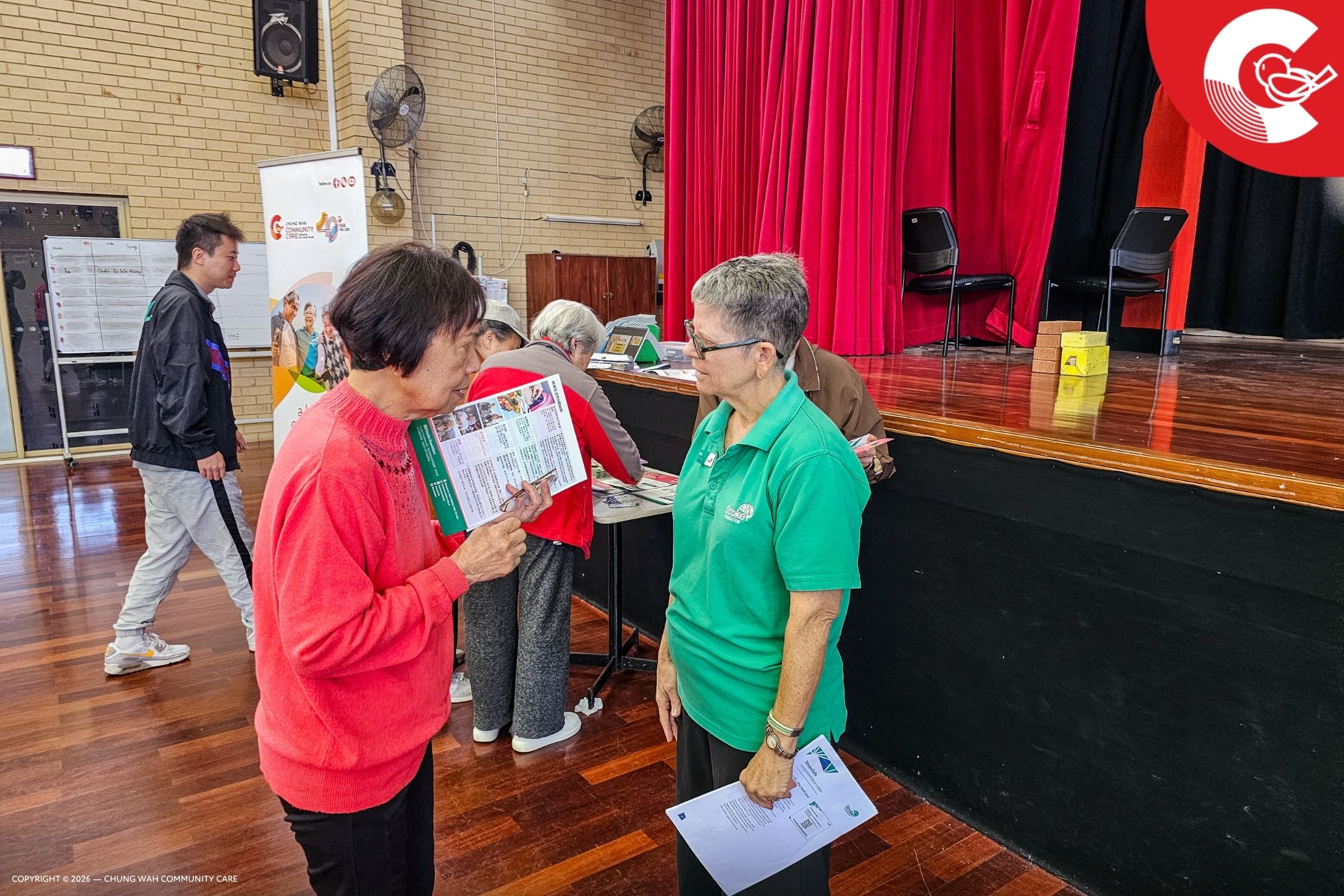
CWCC is a not-for-profit organisation that supports the health and wellbeing of Western Australia’s diverse communities, especially older people, carers, and families. These seminars are part of CWCC’s ongoing work to meet community health needs and connect people with trusted professional resources.
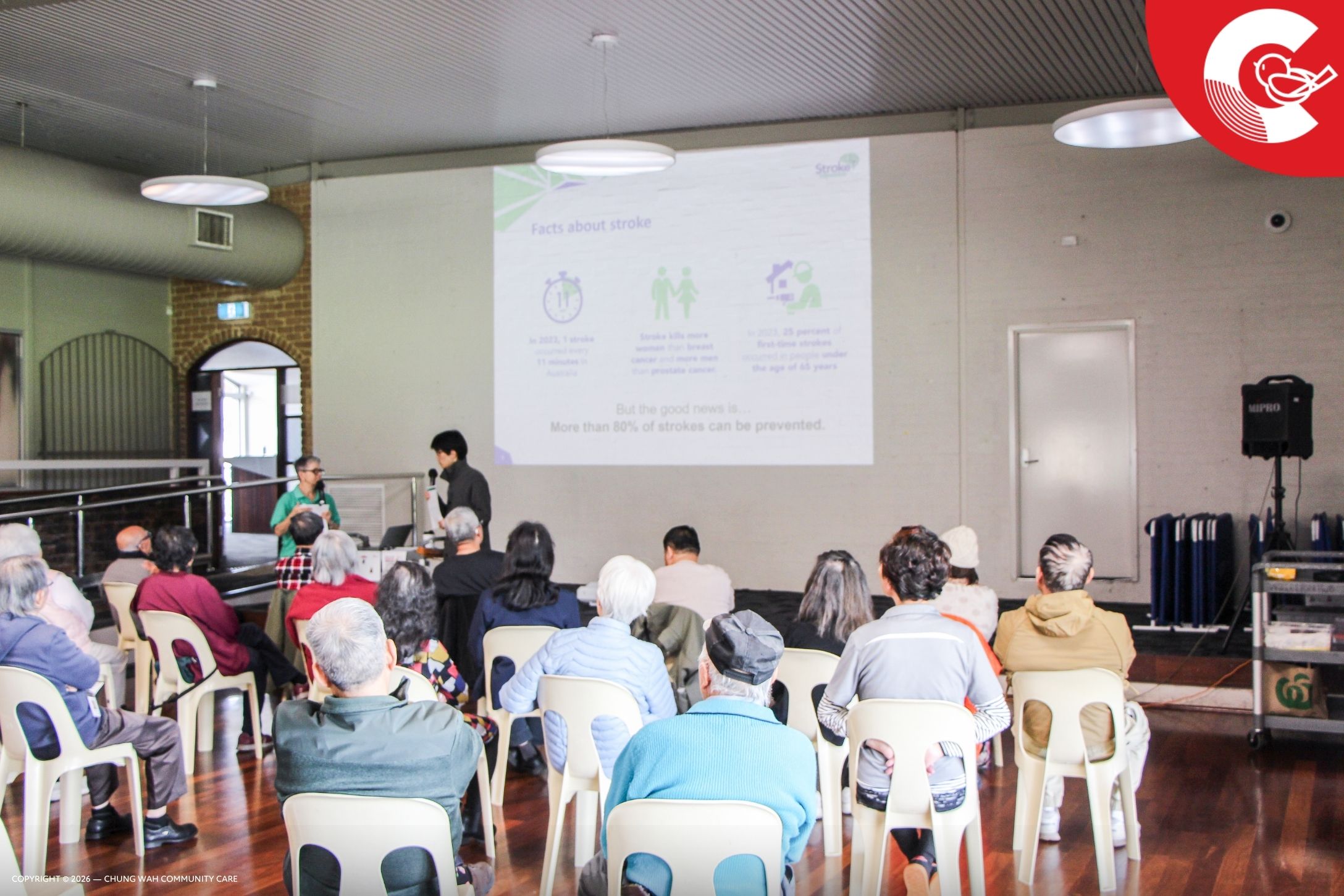
At the sessions, health professionals from the Stroke Foundation used real-life examples to explain what causes a stroke, the warning signs and risk factors, and how people can lower their risk. By offering health education in familiar community spaces, participants could get reliable, easy-to-understand information in a supportive setting.
The Stroke Foundation shared that there were about 45,785 strokes in Australia in 2023, which means one stroke happened every 11 minutes. The good news is that over 80% of stroke risk can be lowered with good health management and lifestyle changes.
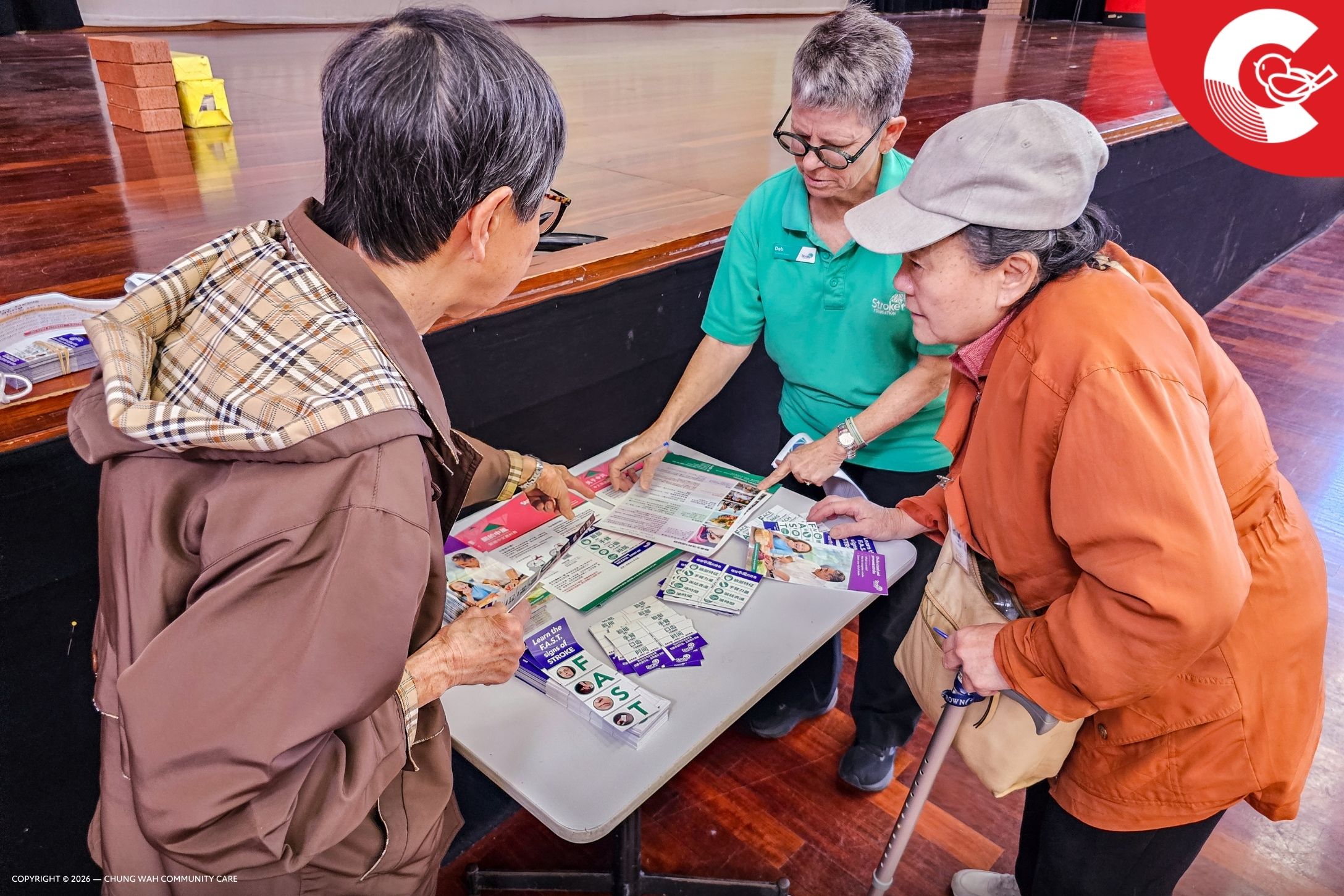
One of the main topics was the F.A.S.T. test, which is an easy way to spot common signs of stroke. If a stroke happens, noticing the signs quickly and calling 000 right away can help reduce brain damage and improve recovery.
F.A.S.T. stands for:
F – Face: Check the person’s face. Has their mouth drooped?
A – Arms: Ask them to lift both arms. Can they lift both, or is one arm weak or unable to stay raised?
S – Speech: Listen to their speech. Is it slurred? Do they have difficulty speaking or understanding?
T – Time: If you notice any of these signs, call 000 immediately for emergency medical assistance.
For people whose first language is not English, getting accurate health information, understanding the healthcare system, and knowing when to get help can be hard. By bringing professional organisations to its community hubs, CWCC hopes to make things easier and give everyone a chance to ask questions and learn from health professionals in a familiar, welcoming place.
Many people said the sessions helped them understand stroke and its risks better, and also made them more aware of their own health in daily life.
Every minute counts when a stroke happens. By remembering F.A.S.T. and acting quickly, any of us could help save a life.