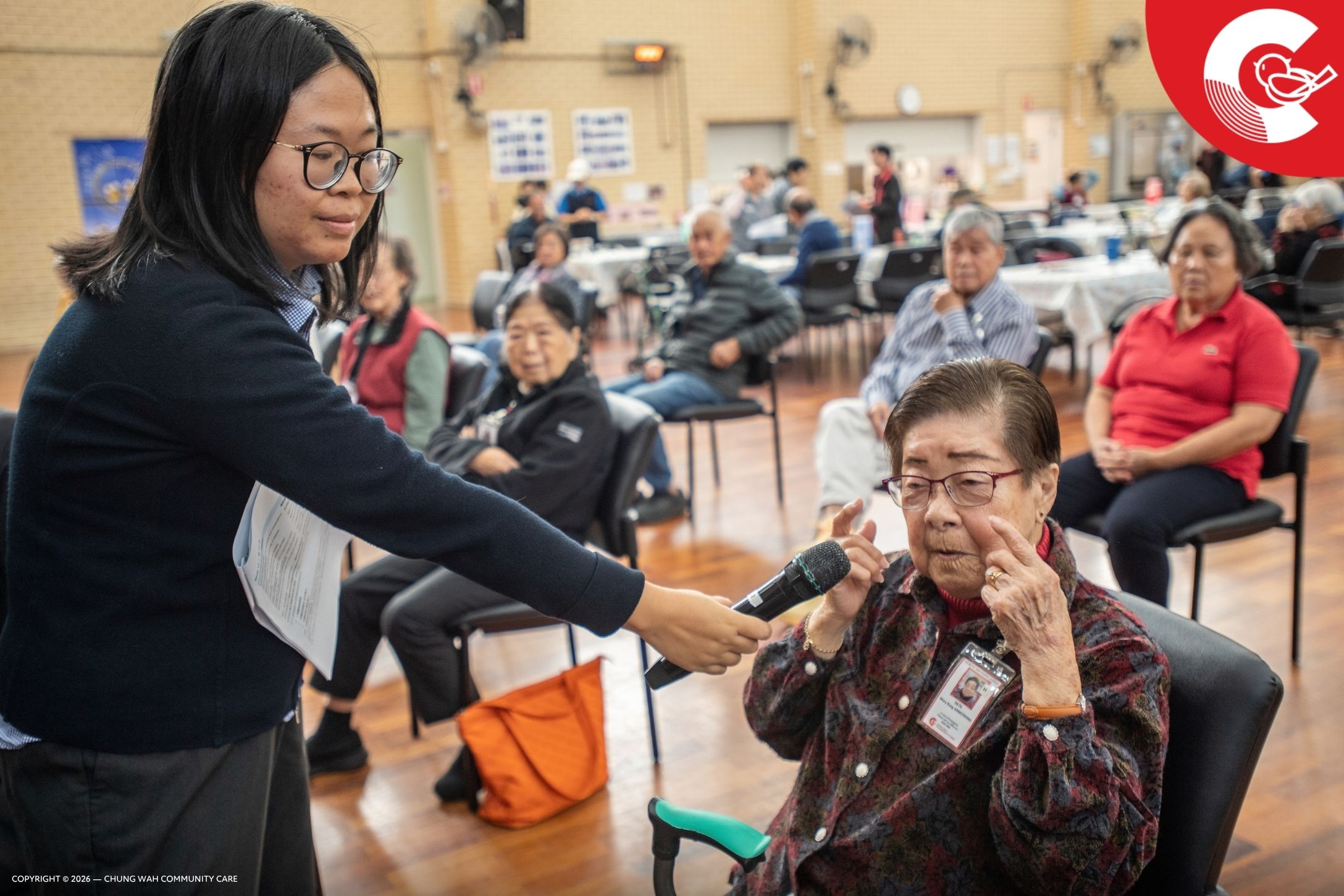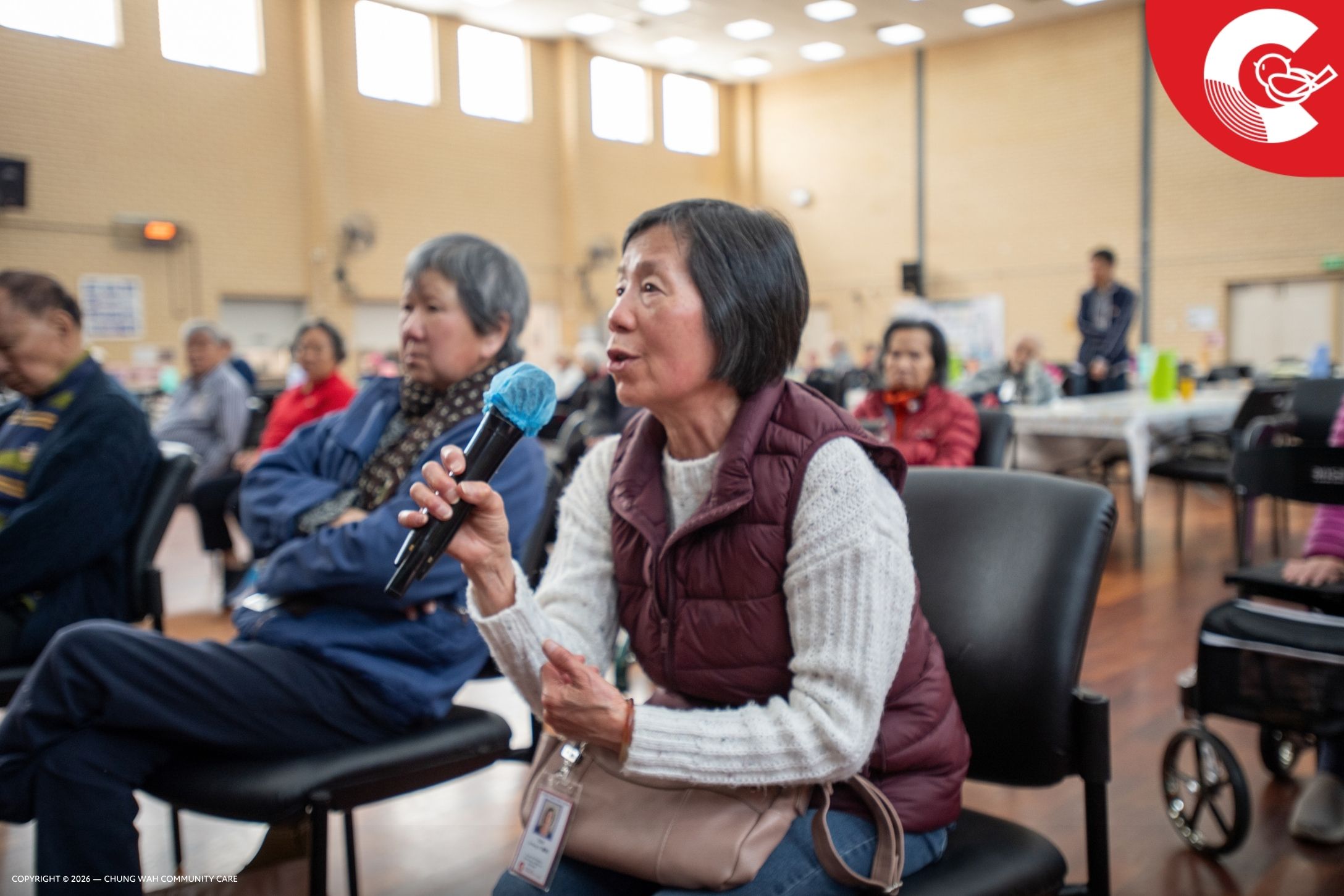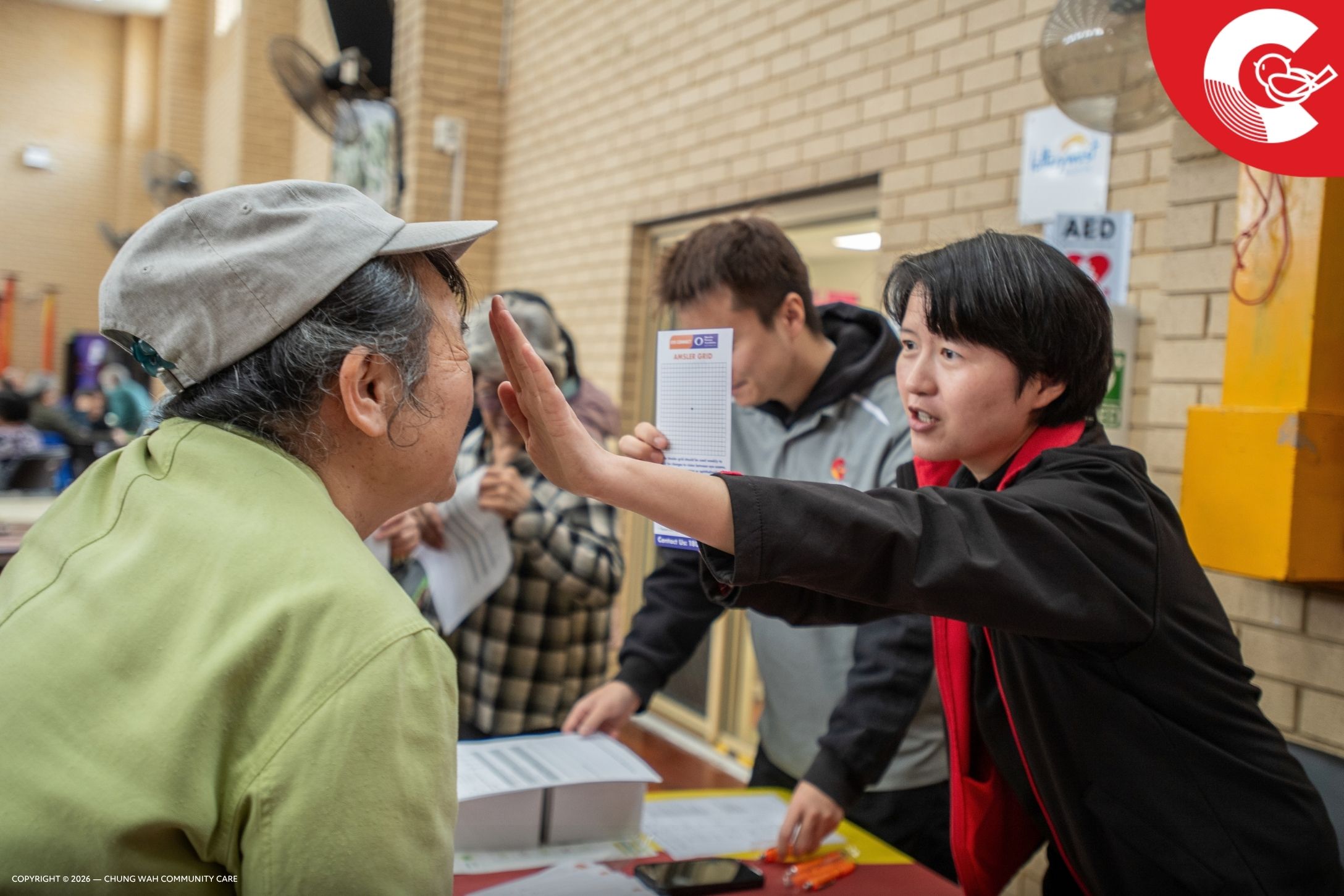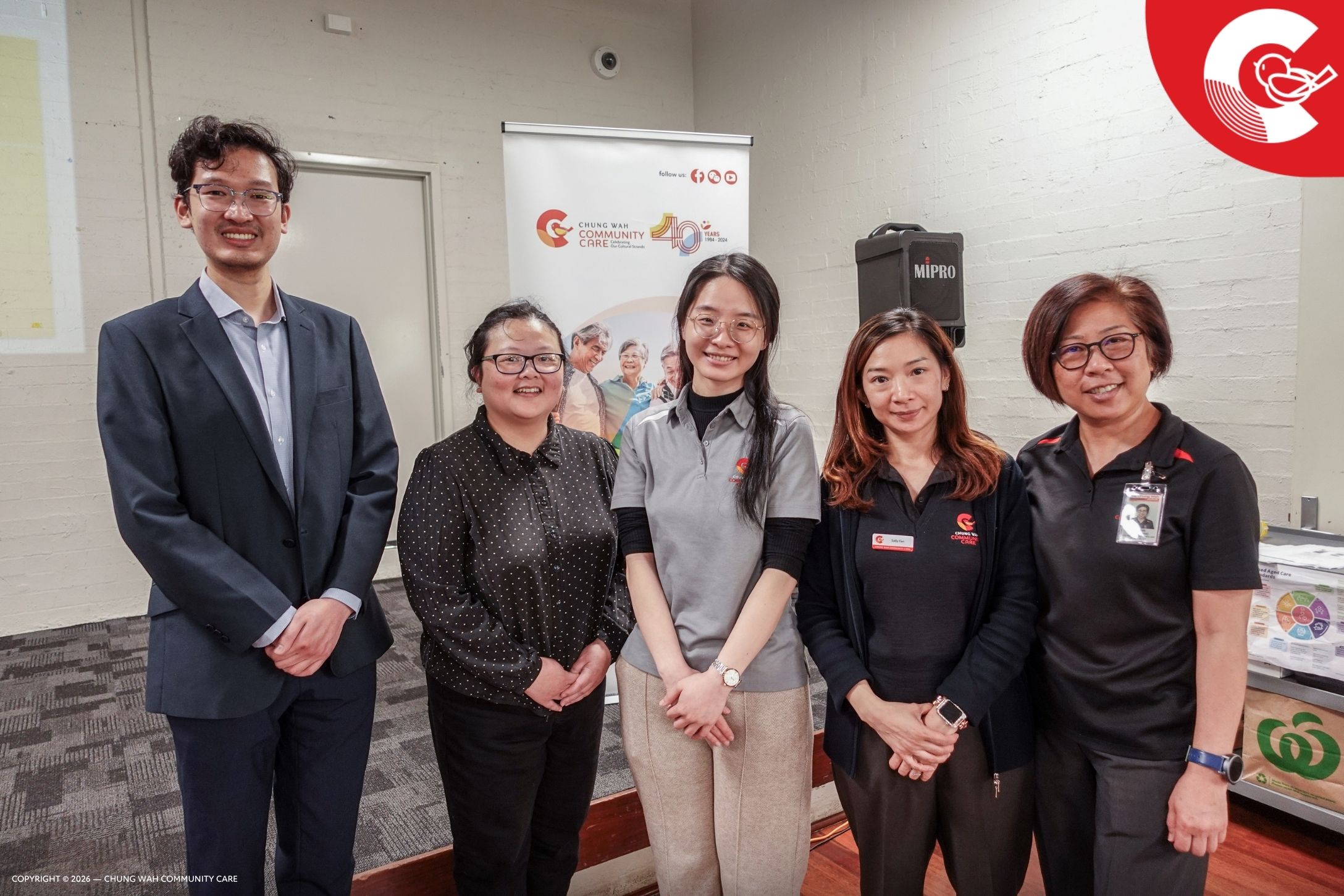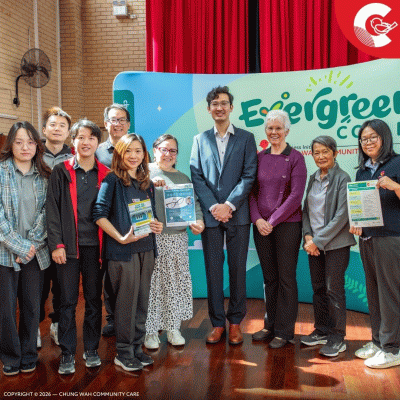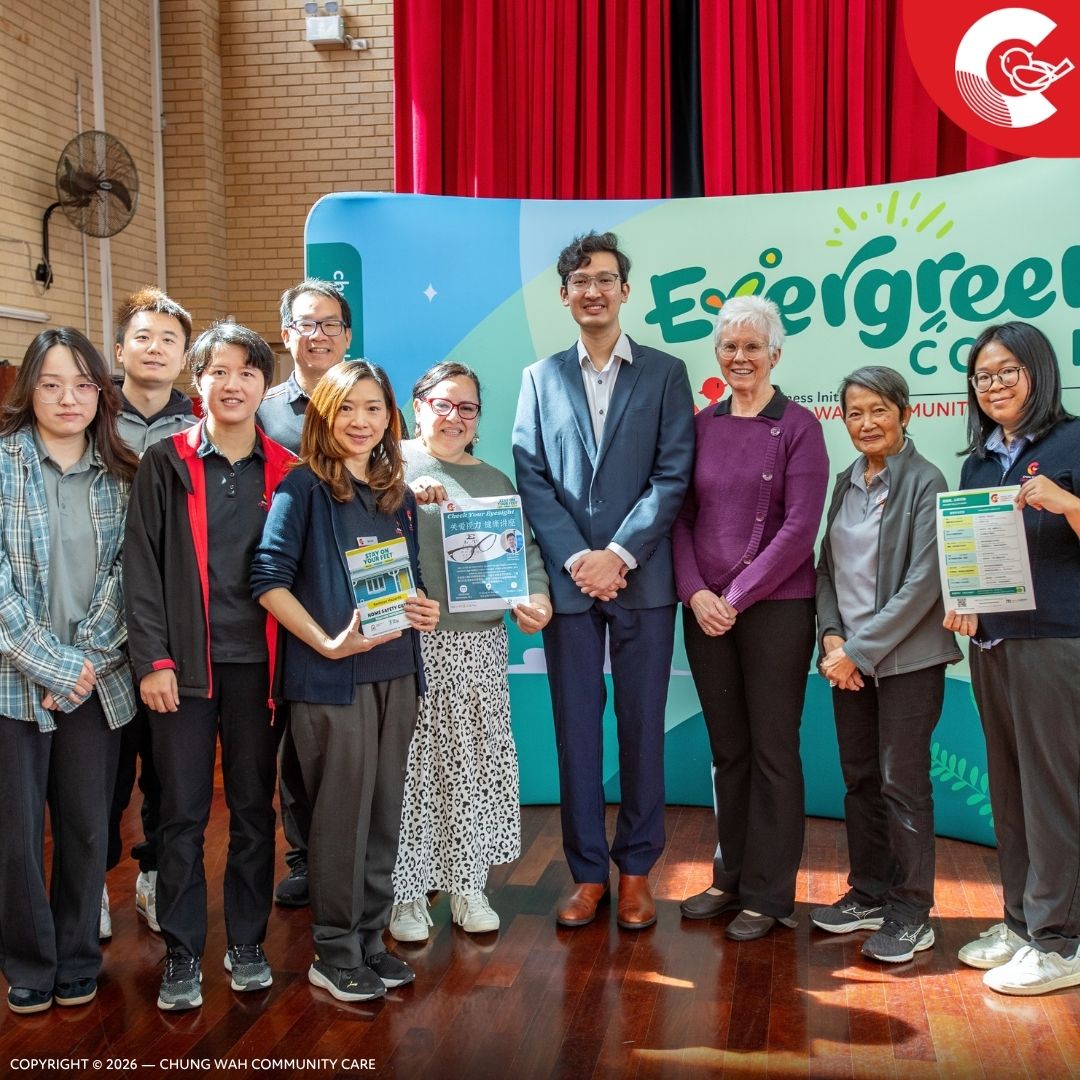
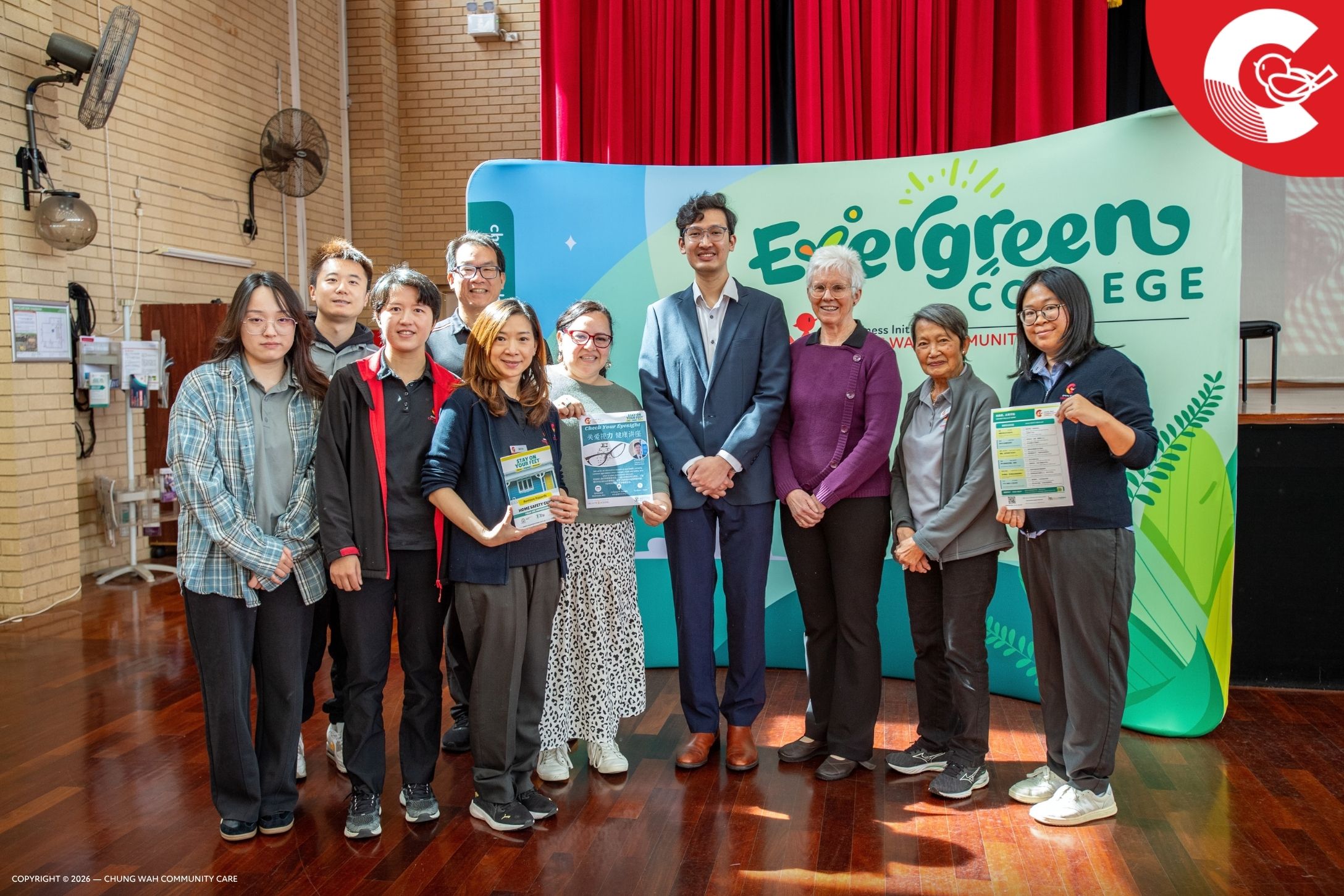
In early September, Chung Wah Community Care (CWCC) held its “Check Your Eyesight” health talks at the Balcatta and Willetton Community Hubs. The program combined eye health, daily wellbeing, and home safety in a multilingual session for older community members.
The sessions were supported by the Remove Hazards program, funded by Injury Matters. This program helps older people understand and reduce safety risks in daily life. Ben, an optometrist and PhD candidate at the University of Western Australia (UWA), led the talks in both English and Chinese. This made important eye health information easier for people from different language backgrounds to access.
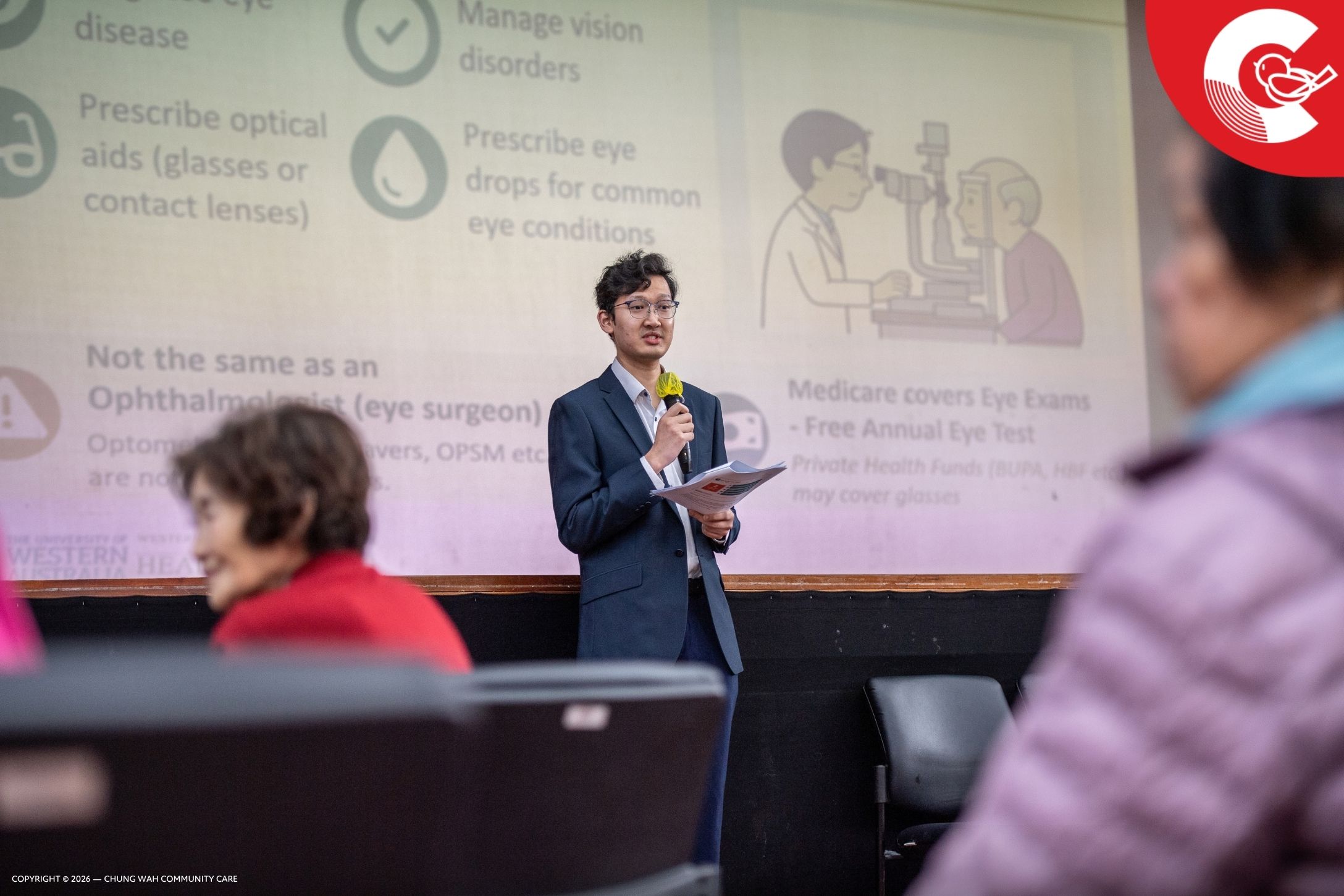
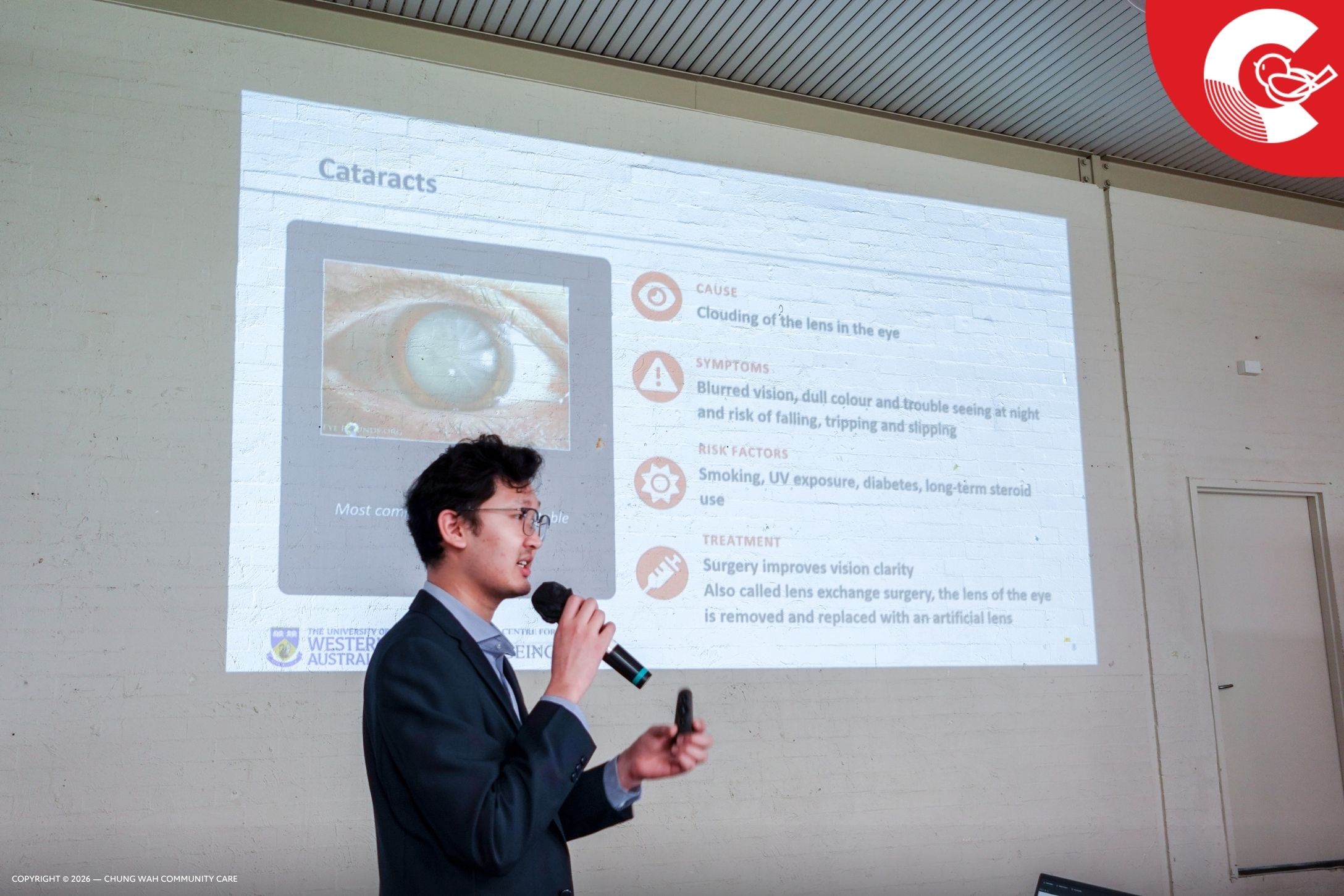
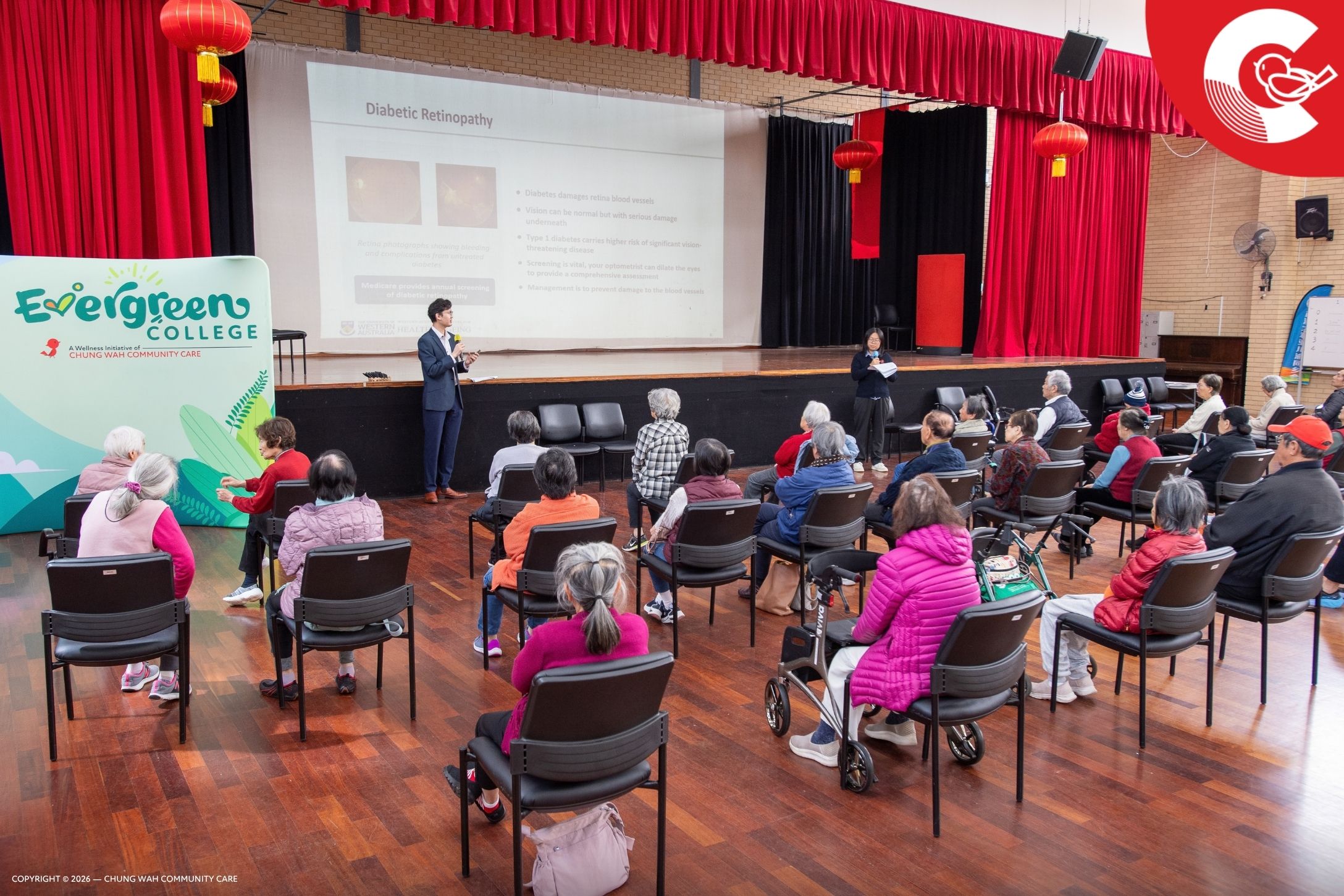
Ben used everyday examples to explain common vision changes that come with age, such as presbyopia, eye floaters, and dry eyes. He also talked about short-sightedness and long-sightedness. Participants learned about common eye diseases like glaucoma, age-related macular degeneration, and diabetic retinopathy.
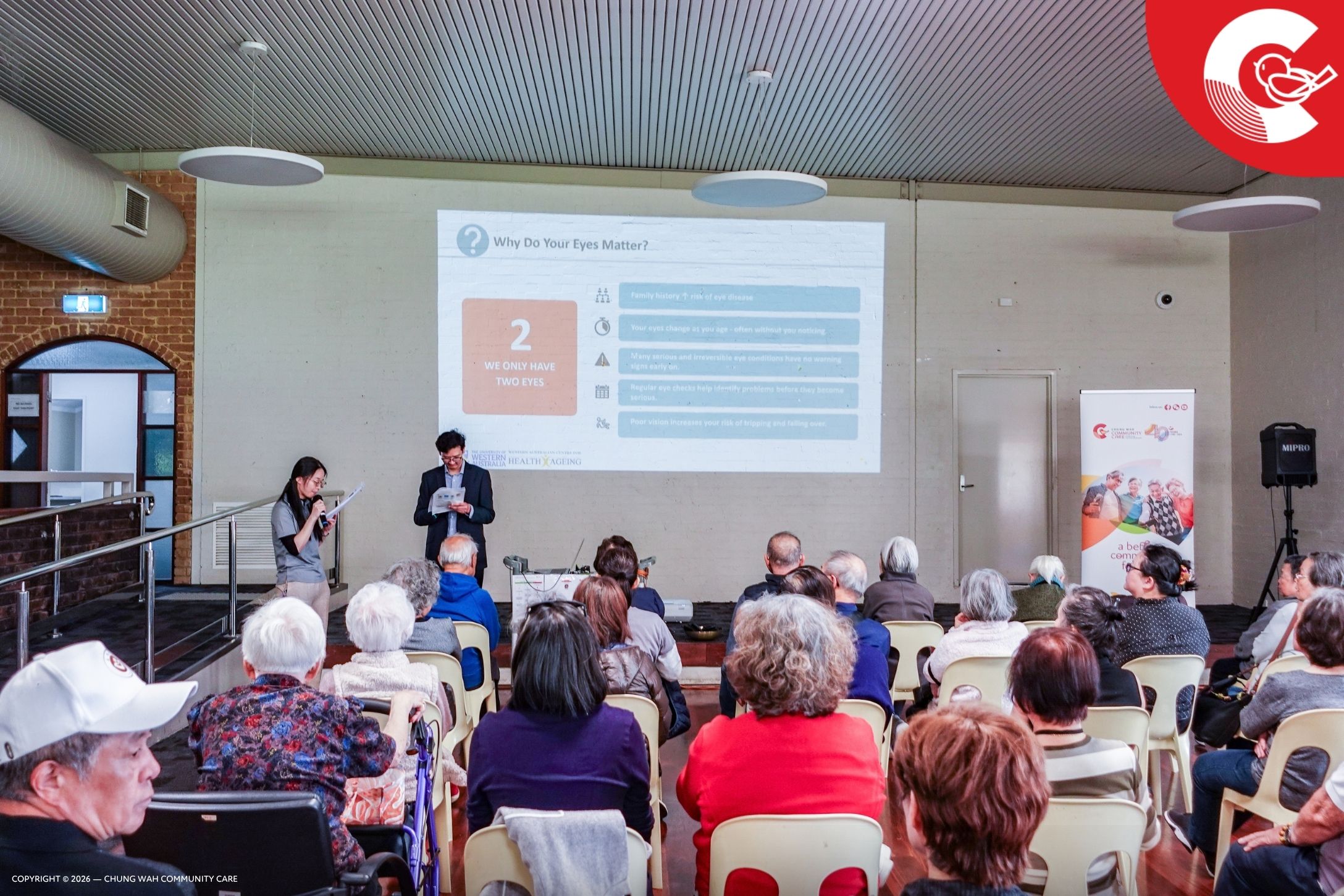
A key message was that some eye diseases can develop without clear symptoms at first. Regular eye exams can help find problems early. People with a family history of glaucoma or macular degeneration, and those with diabetes, were especially encouraged to get regular eye checks.
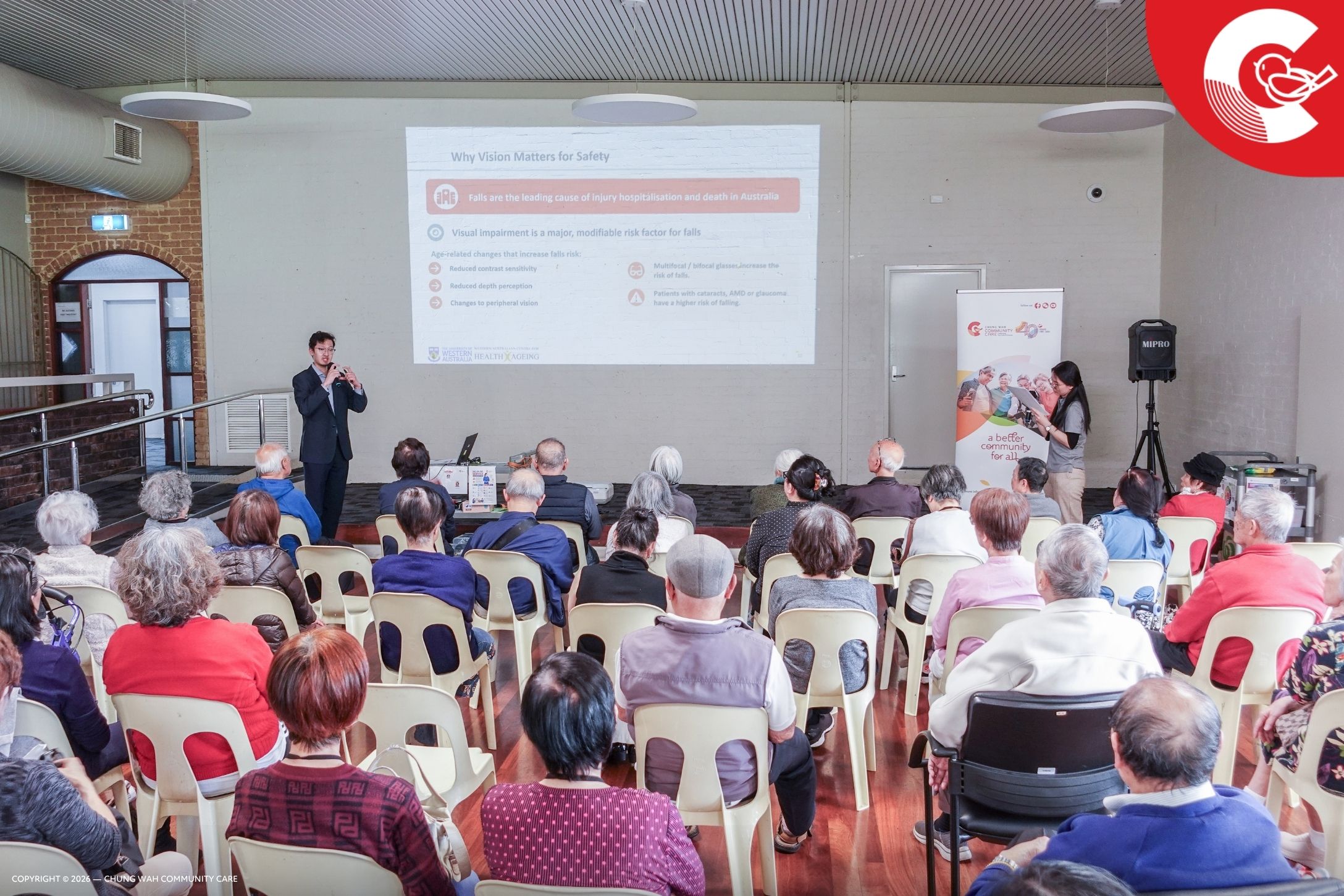
The session also pointed out an important link that is sometimes missed: eyesight can have a direct impact on daily safety.
With practical examples, Ben showed how vision changes can affect judging distance, depth, and color, and can also reduce side vision. These changes may raise the risk of tripping or falling. He encouraged older people who use bifocal or progressive glasses to talk with an optometrist about the best eyewear for their needs.
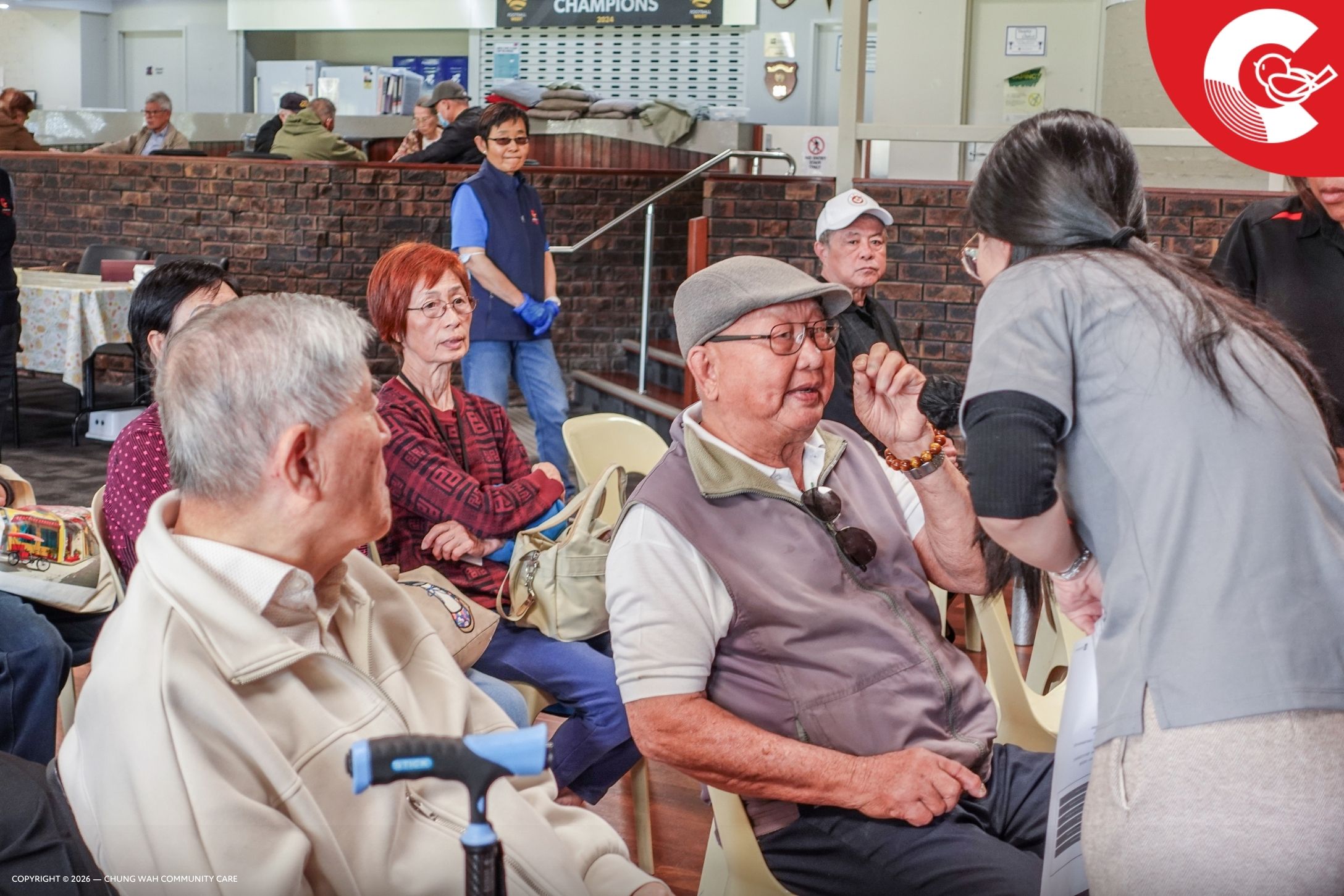
Taking care of your eyes means more than just getting eye exams. Ben encouraged everyone to manage their blood sugar, blood pressure, and cholesterol, stay active, avoid smoking, and protect their eyes from UV rays by wearing sunglasses.
At the end of the sessions, participants got a home safety checklist to help them use what they learned about preventing falls. The checklist covered things like lighting, flooring, and keeping pathways clear. It encouraged everyone to look around their homes and find simple ways to reduce hazards.
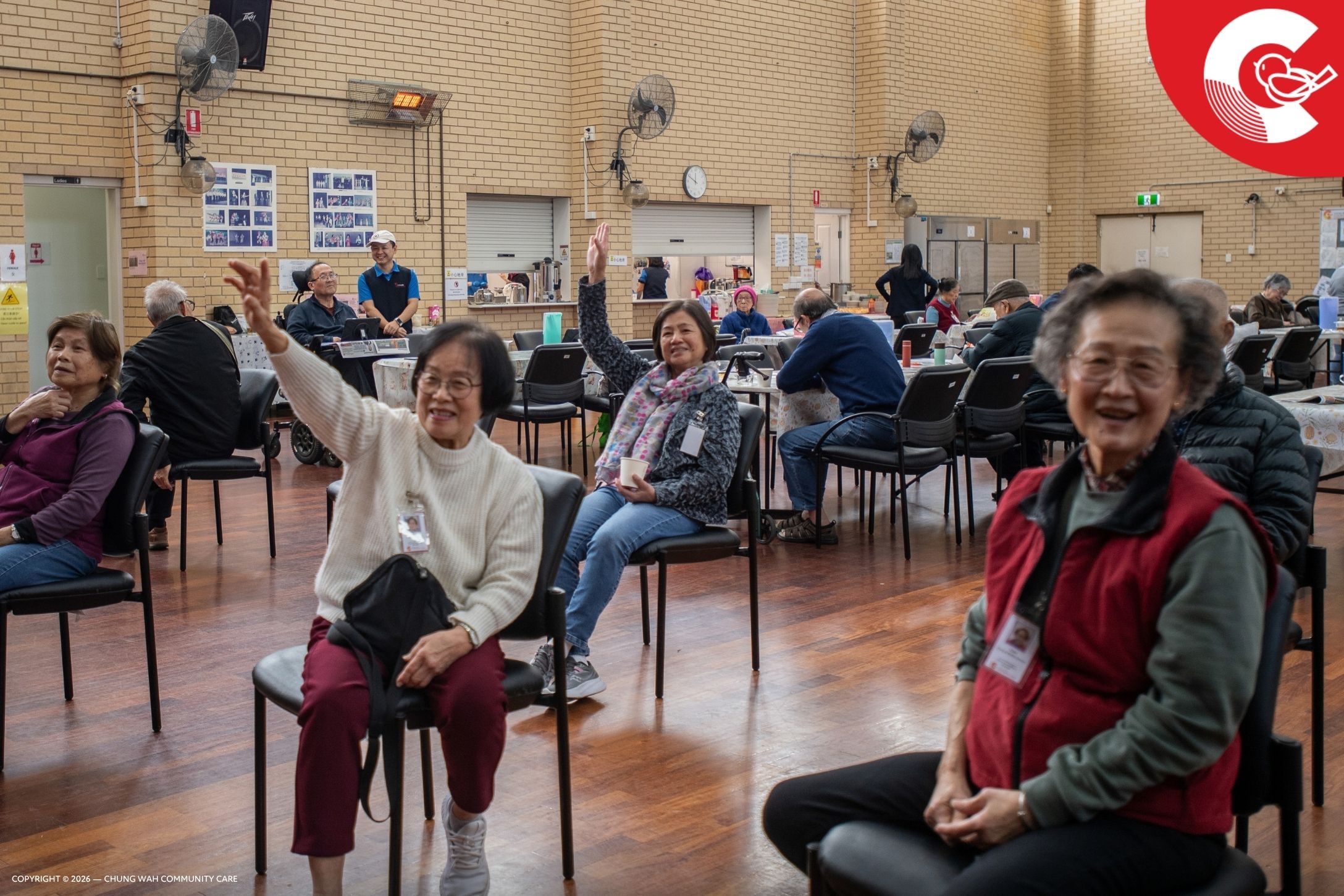
For many people, the sessions gave more than just information about eye health. They left with practical tips and small changes they could use right away to make daily life safer.
For CWCC, health education is more than just sharing facts. It means making sure older people get reliable information in a language they understand and, most importantly, helping them feel confident using that knowledge in their daily lives.