Scams are getting trickier and more common, putting more older people at risk, especially if they face language barriers, aren’t confident using digital technology, or aren’t familiar with new scam tactics.
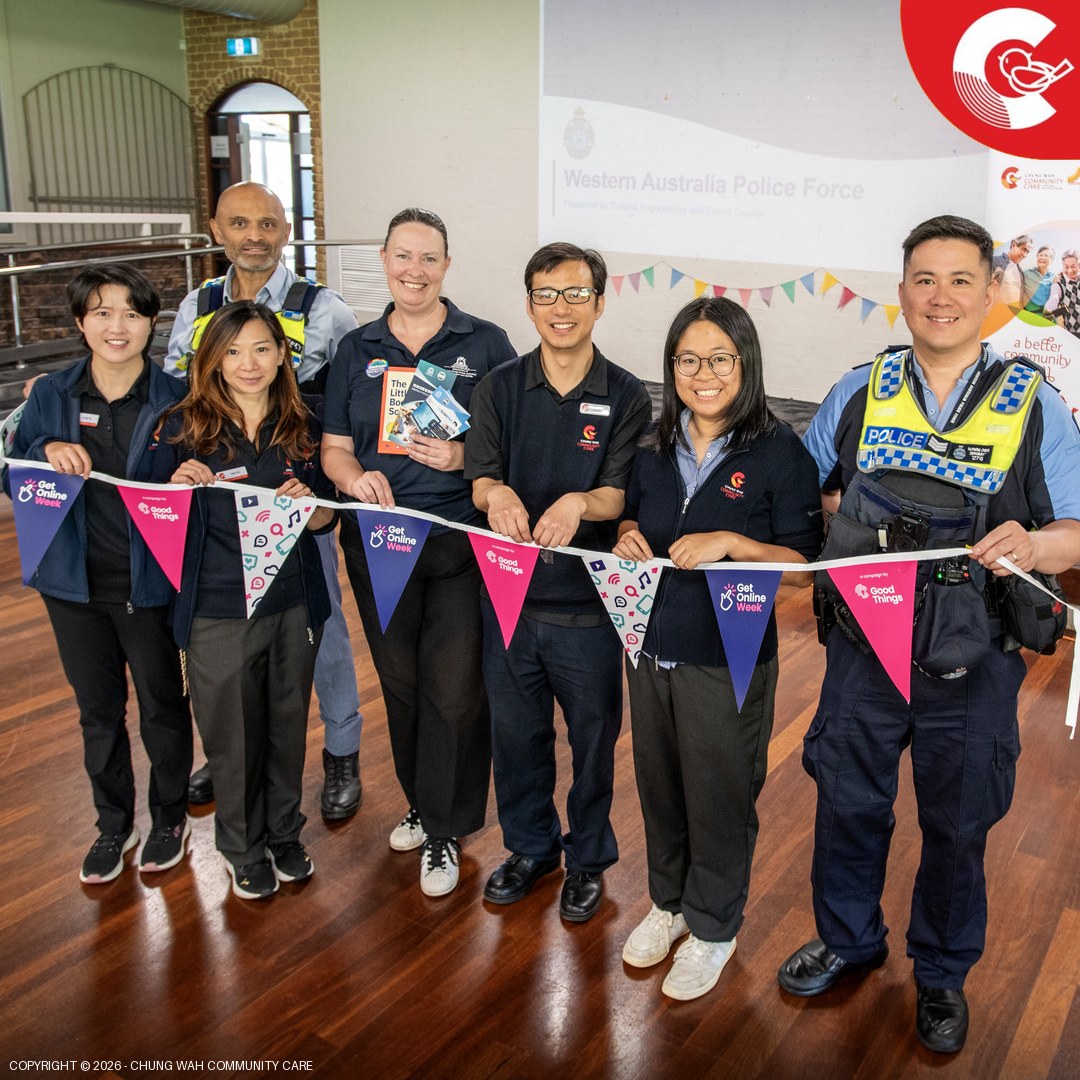
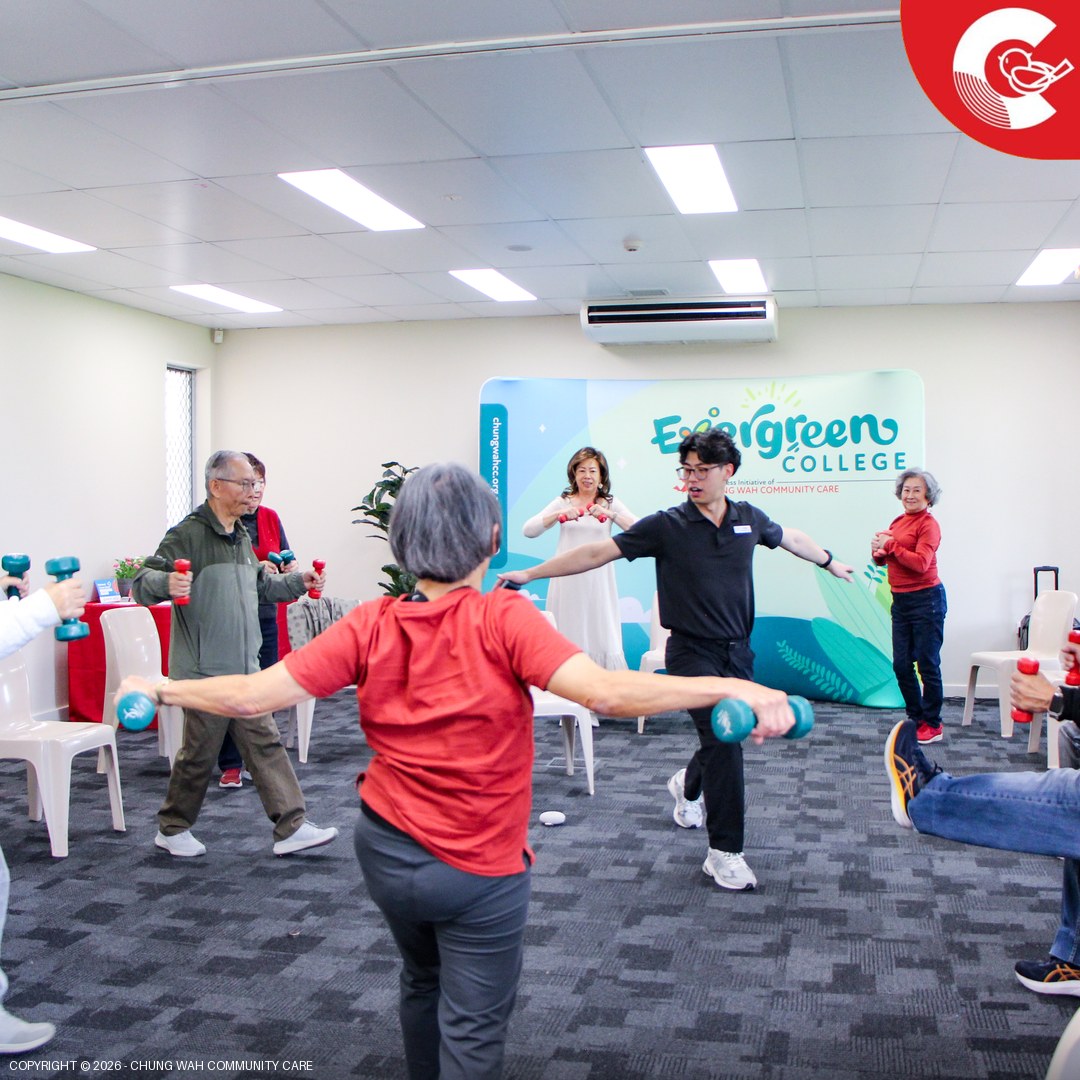
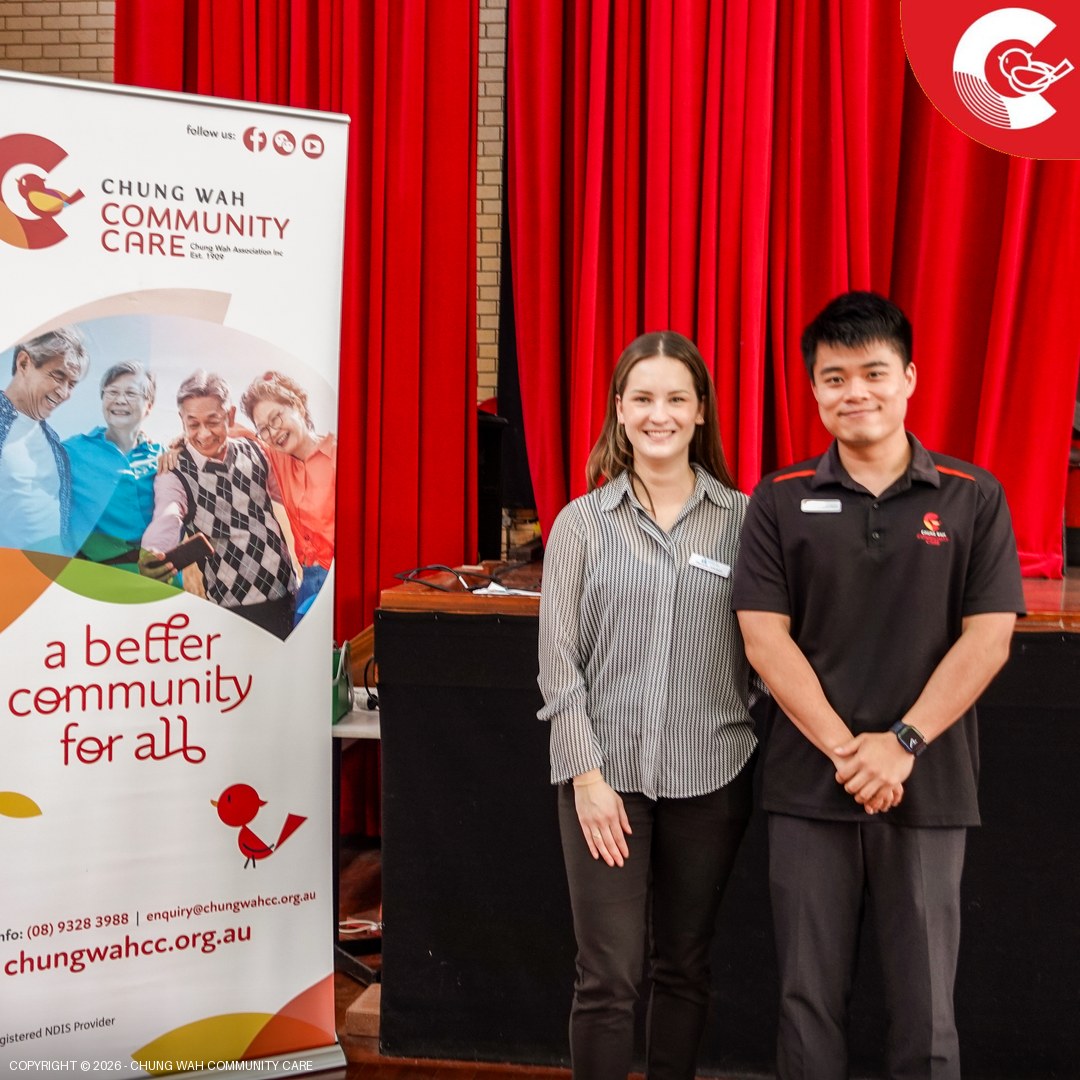
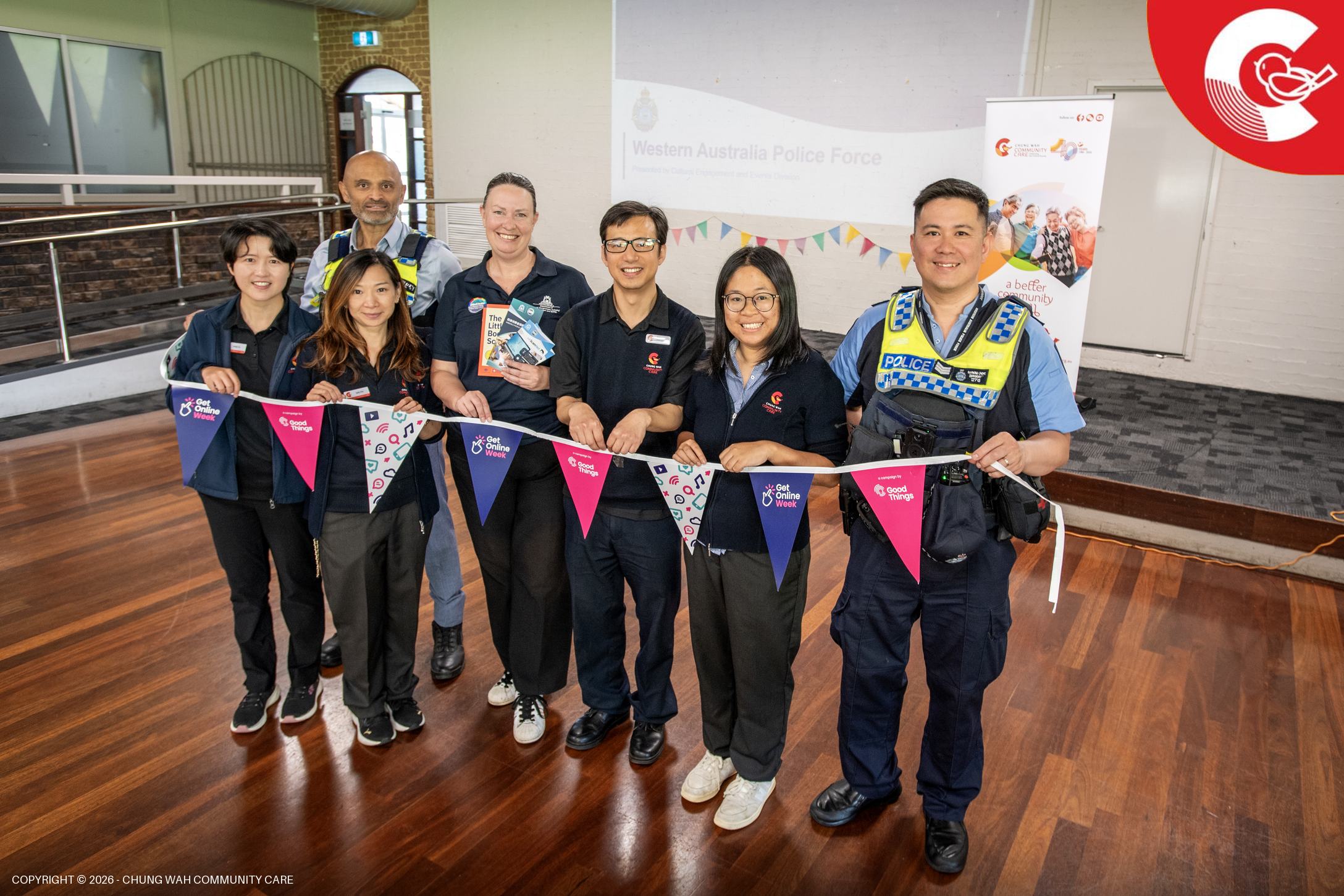
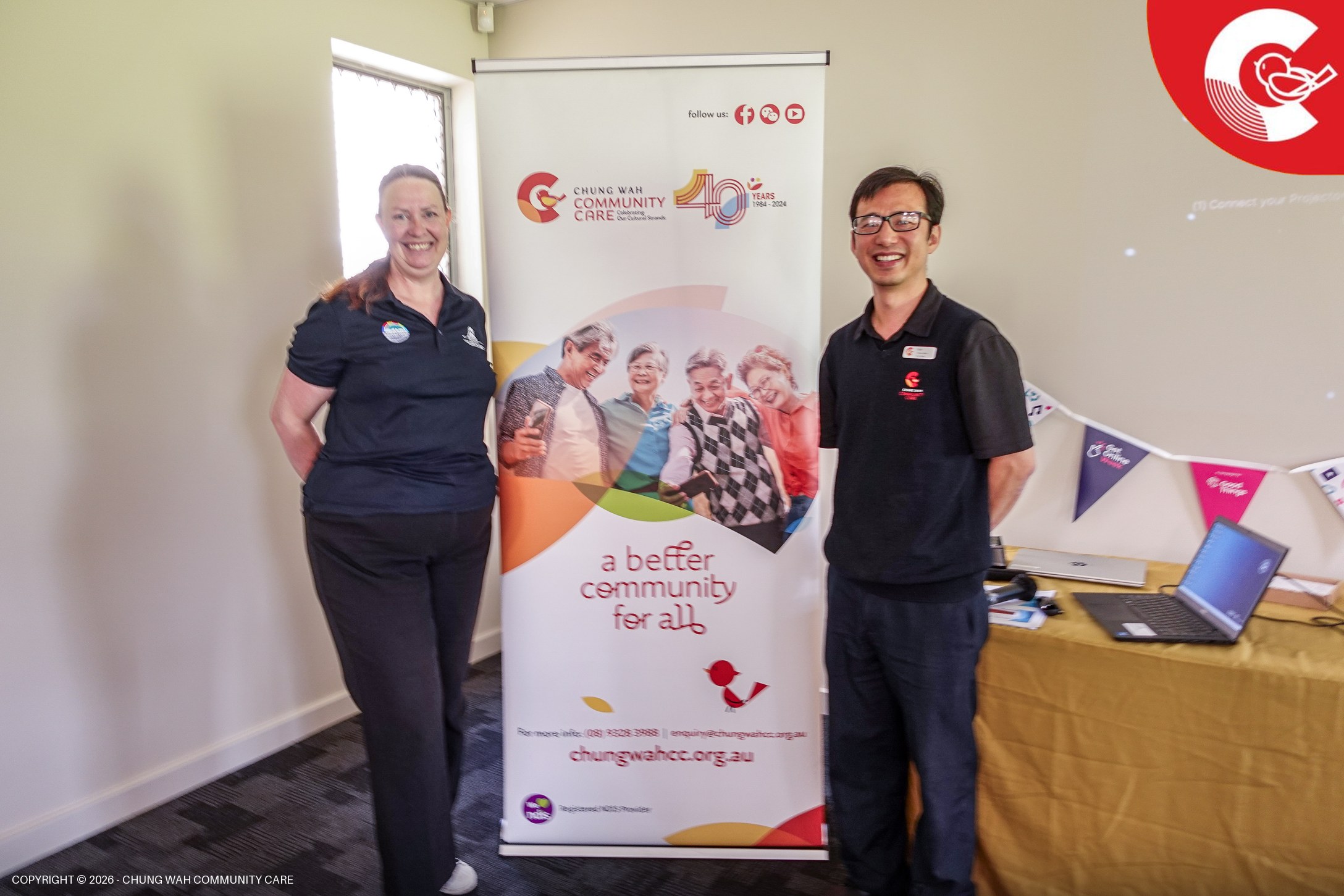
On 23 October 2026, Chung Wah Community Care (CWCC) hosted a special online safety event at its Willetton Community Hub as part of Get Online Week 2026. Funded by Good Things Foundation and Be Connected, the event brought together CWCC, Consumer Protection WA and the WA Police Force to share practical online safety advice with older people from culturally and linguistically diverse (CALD) backgrounds.
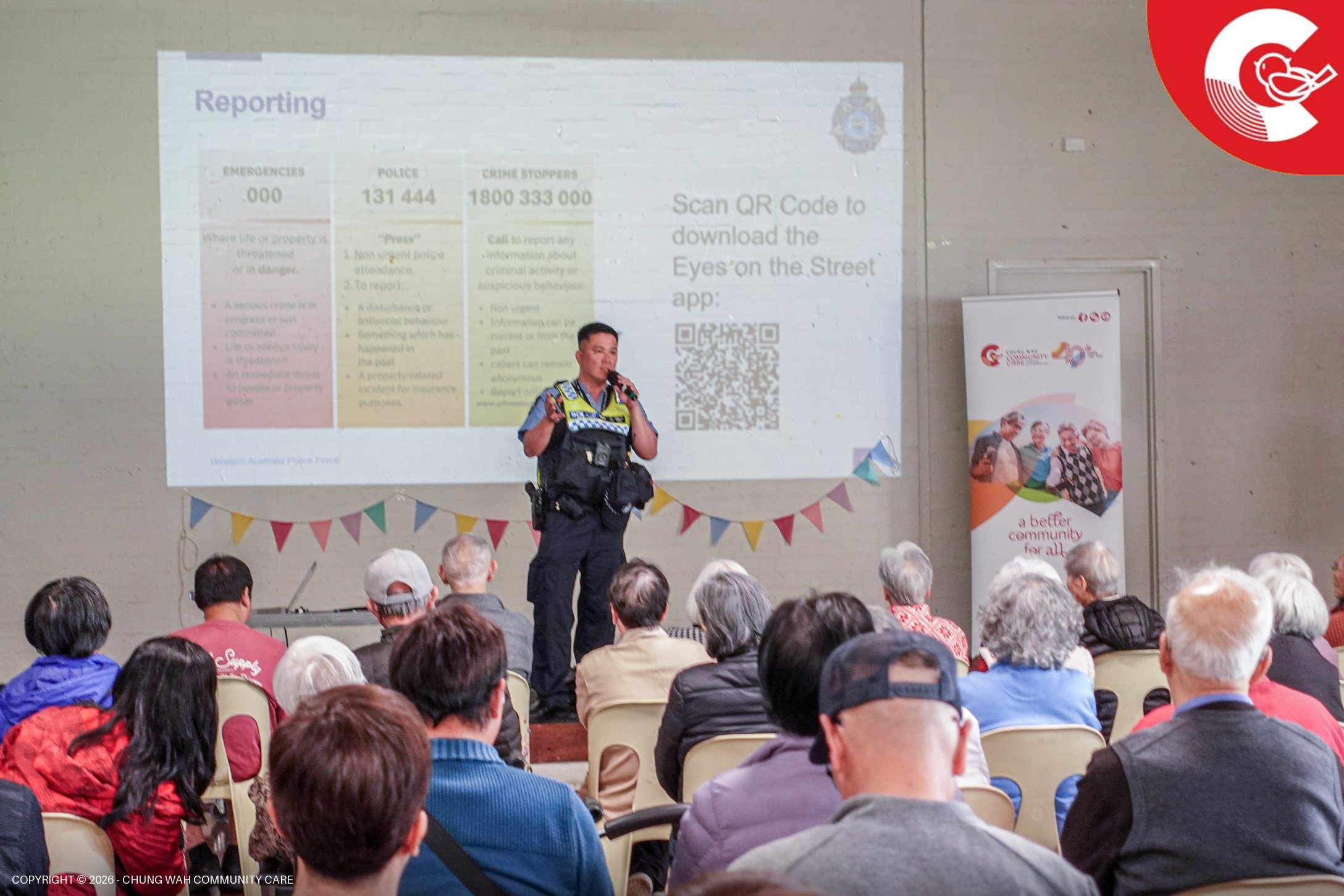
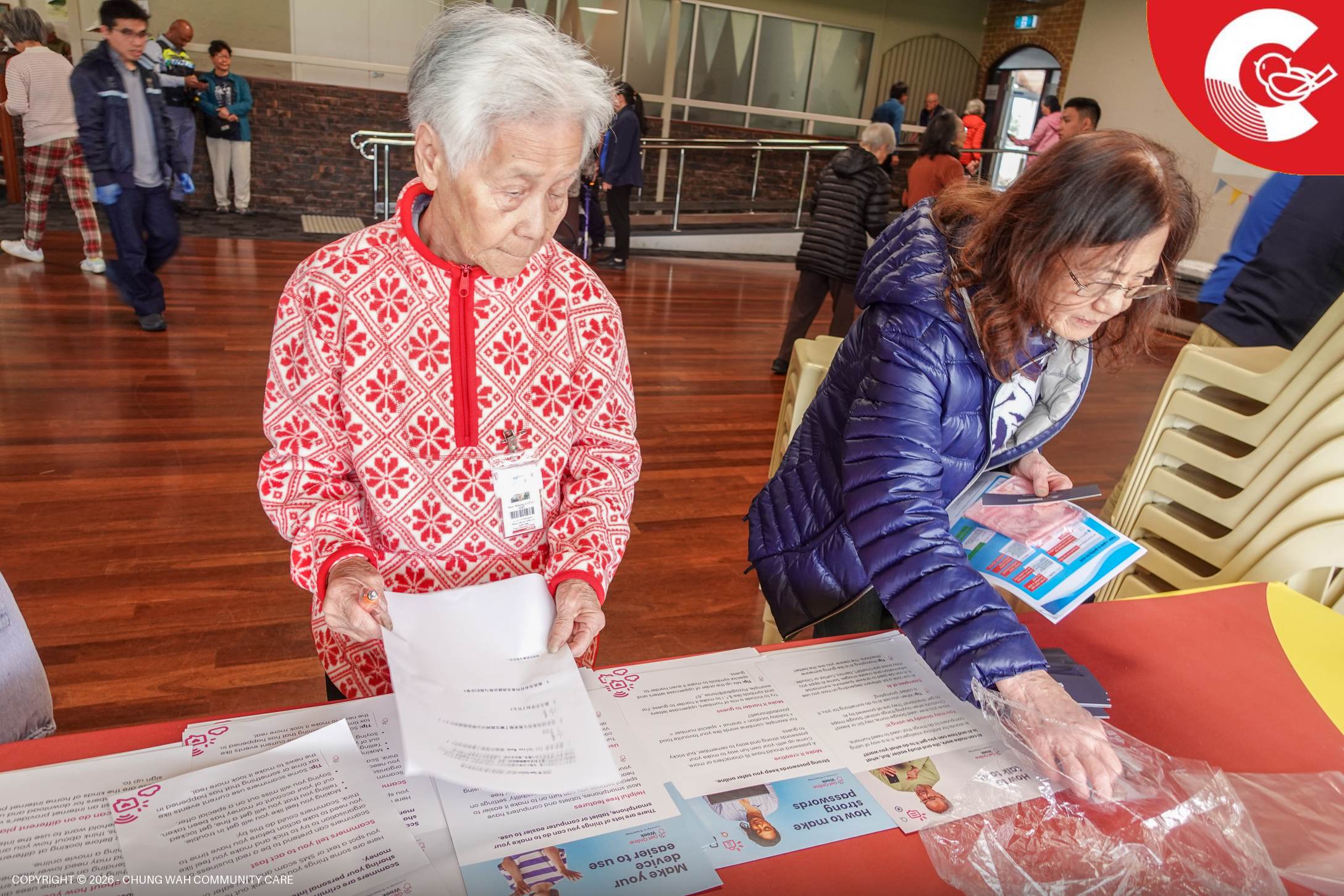
The sessions focused on online safety, scam prevention and digital literacy, helping participants better understand common online threats and learn practical ways to protect themselves.
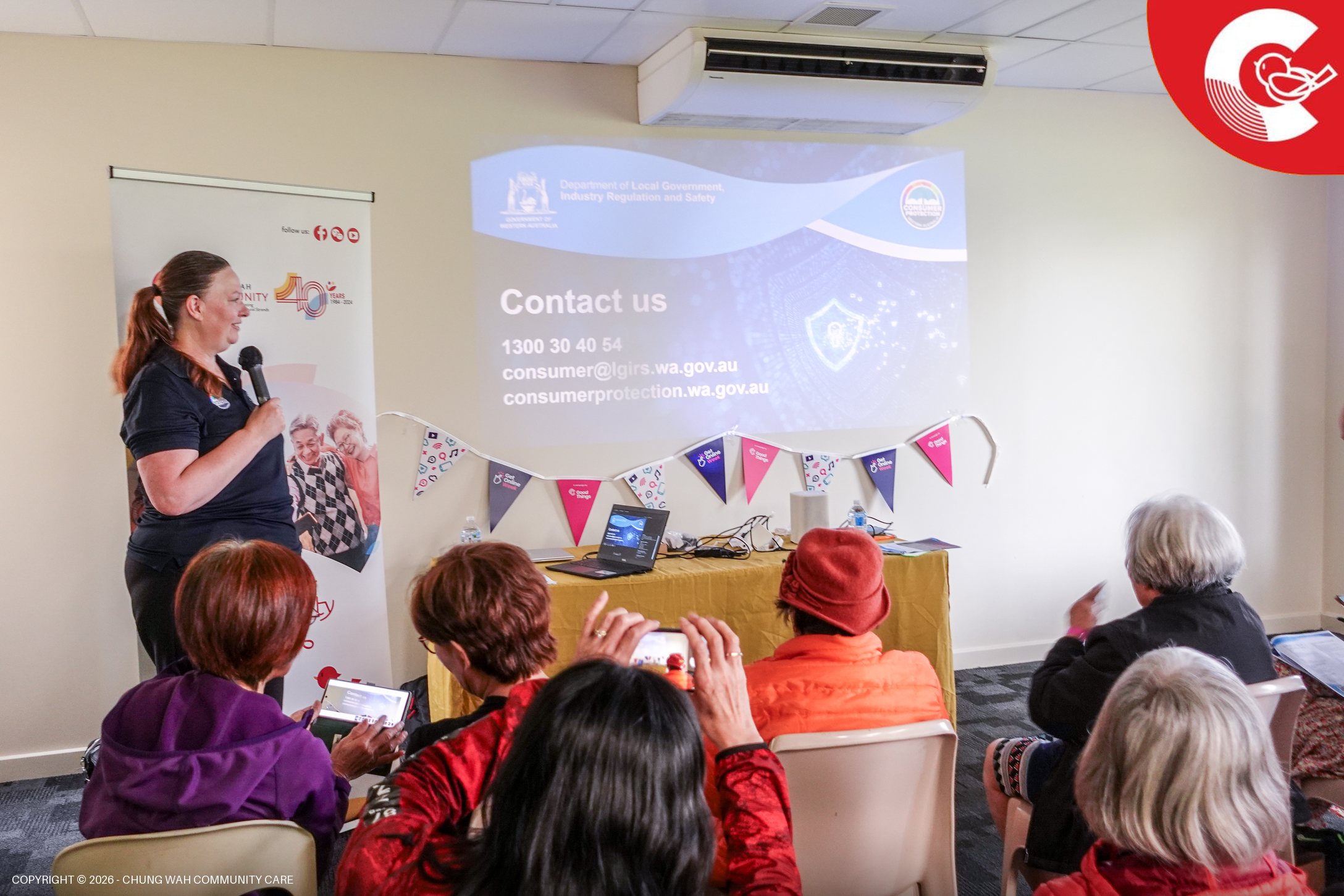
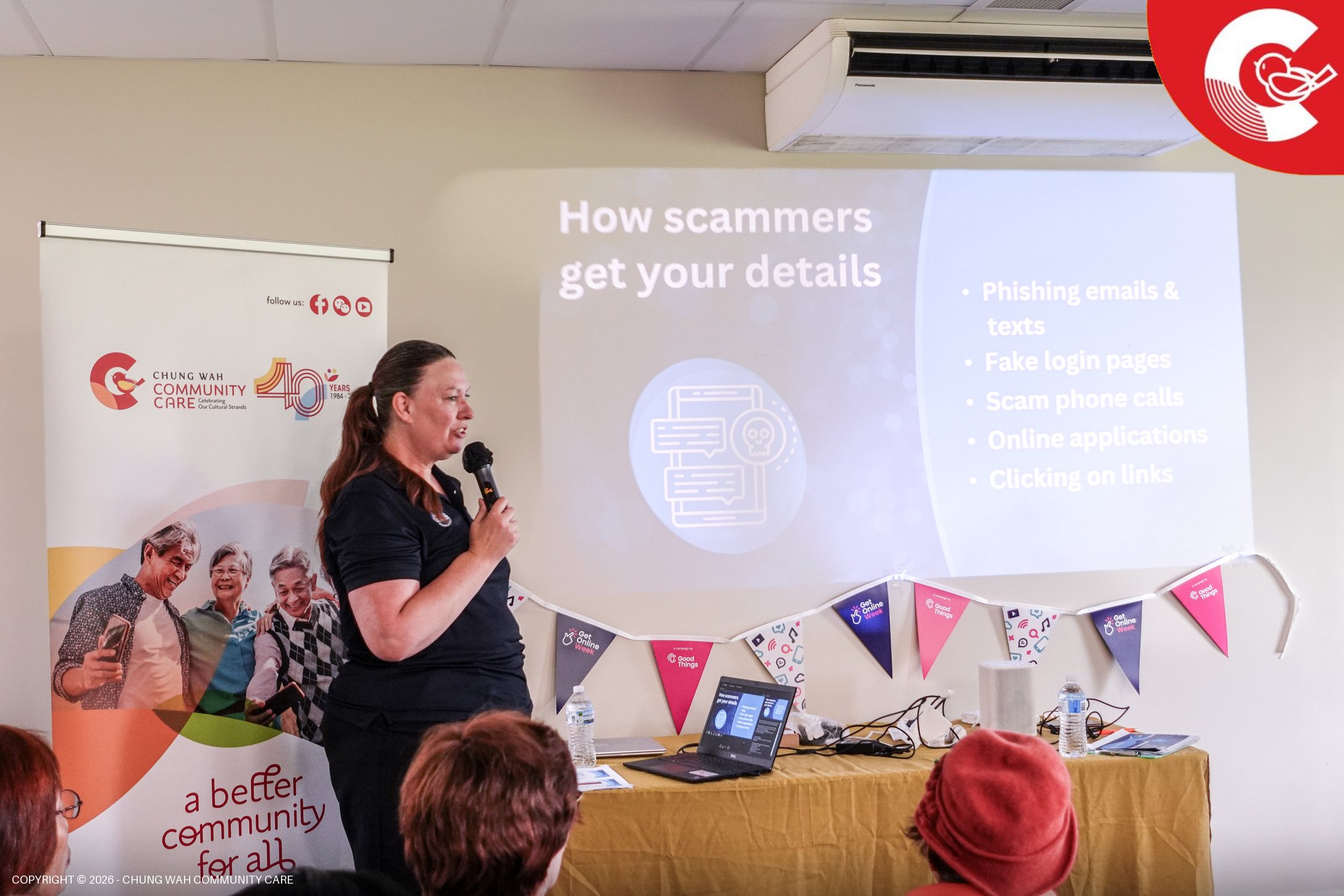
During the first presentation, Consumer Protection WA introduced a range of common scams, including online shopping scams, phishing, scams impersonating the Australian Taxation Office (ATO) and Medicare, dating and romance scams, and technical support scams.
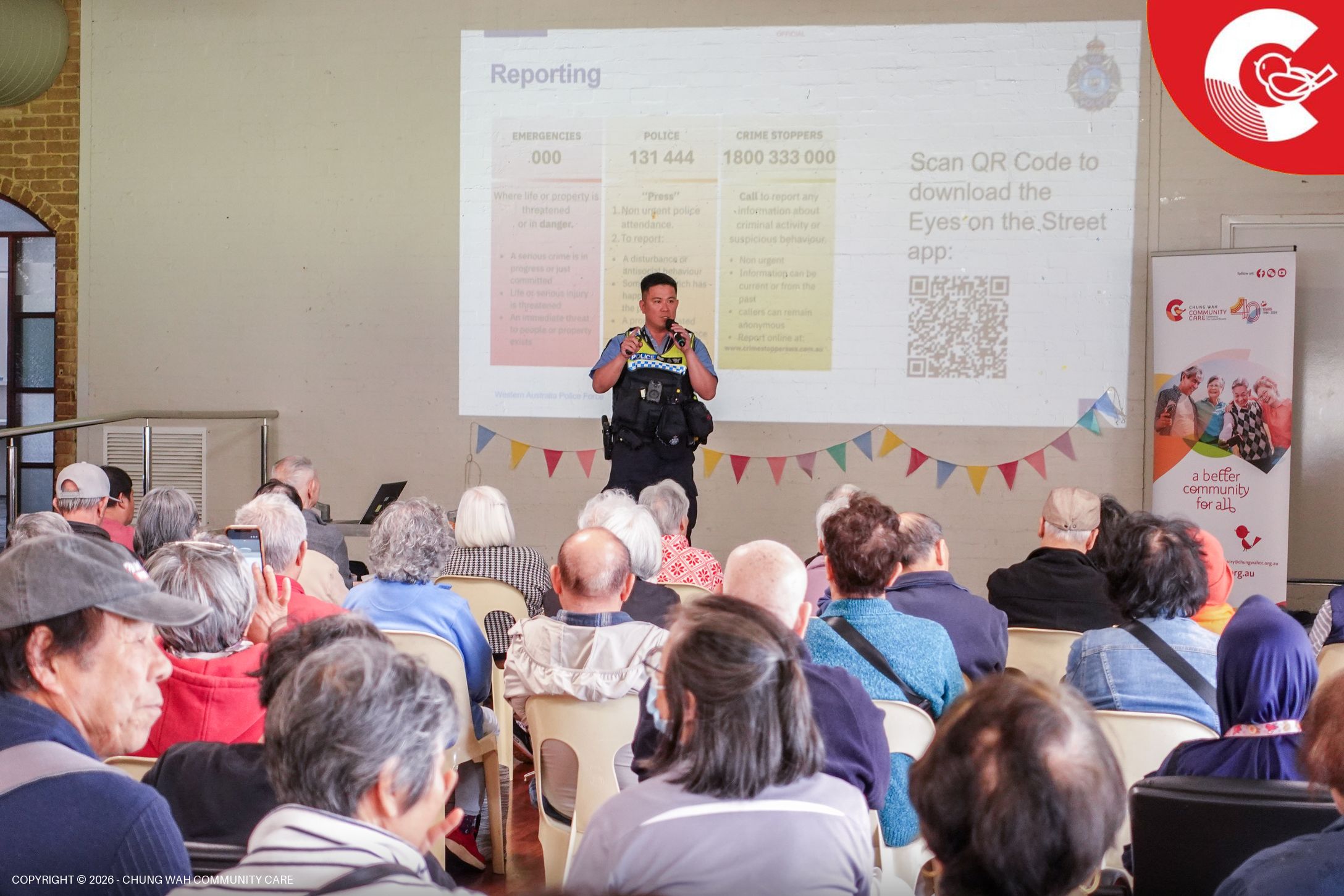
Using real-life examples, the presenter encouraged participants to look out for warning signs such as fake online stores, prices that seem too good to be true, suspicious payment requests, and messages pretending to be from banks or government agencies to obtain personal information.
The session also introduced a simple but effective approach to scam prevention: Stop. Check. Protect.
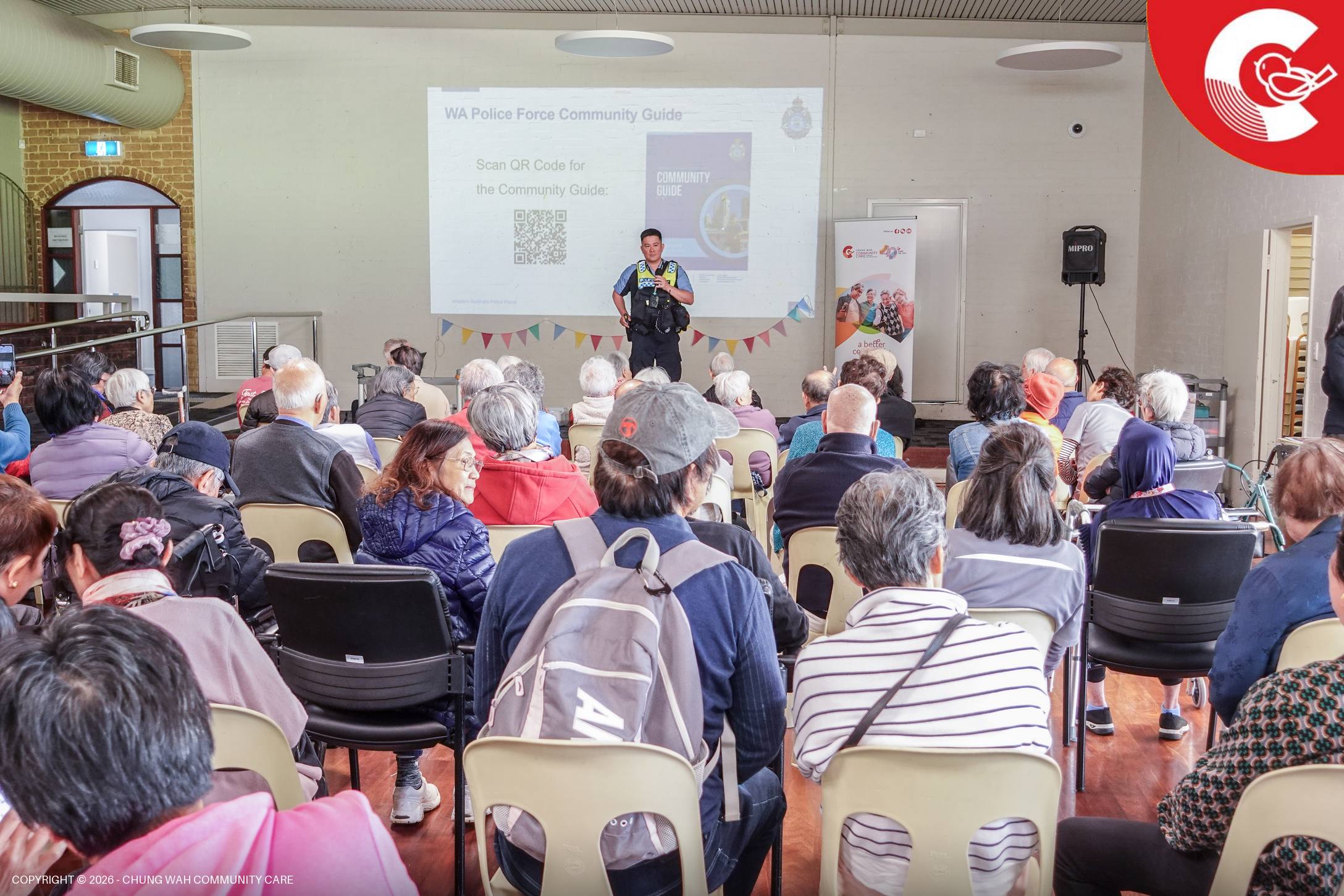
Before transferring money or sharing personal details, participants were encouraged to pause and think, verify the identity of the person or organisation through official websites, avoid clicking unfamiliar links, and never disclose sensitive banking information to unverified sources.
Anyone who suspects a scam has targeted them was advised to contact their bank immediately and seek assistance through services such as Scamwatch, ReportCyber or IDCARE.
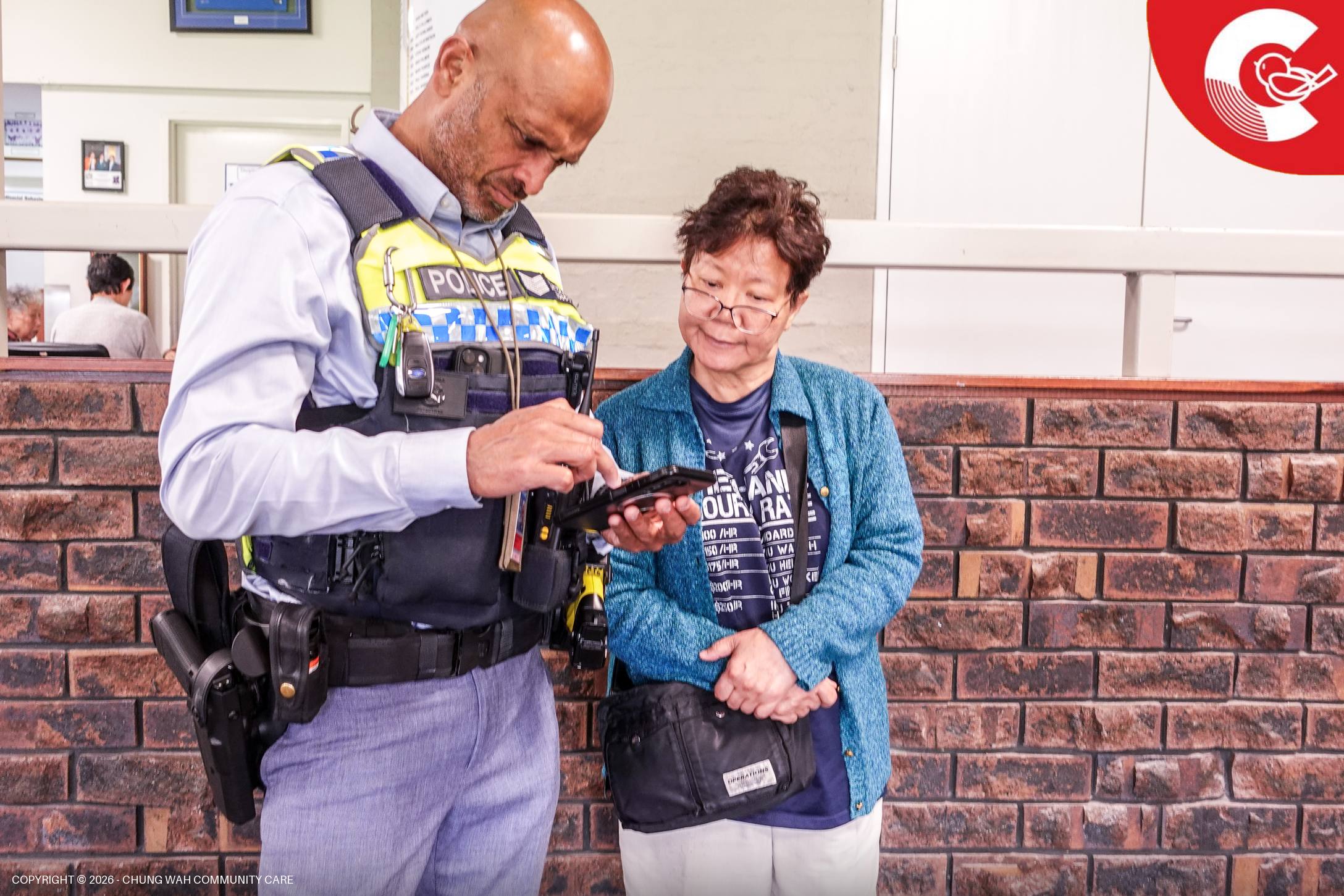
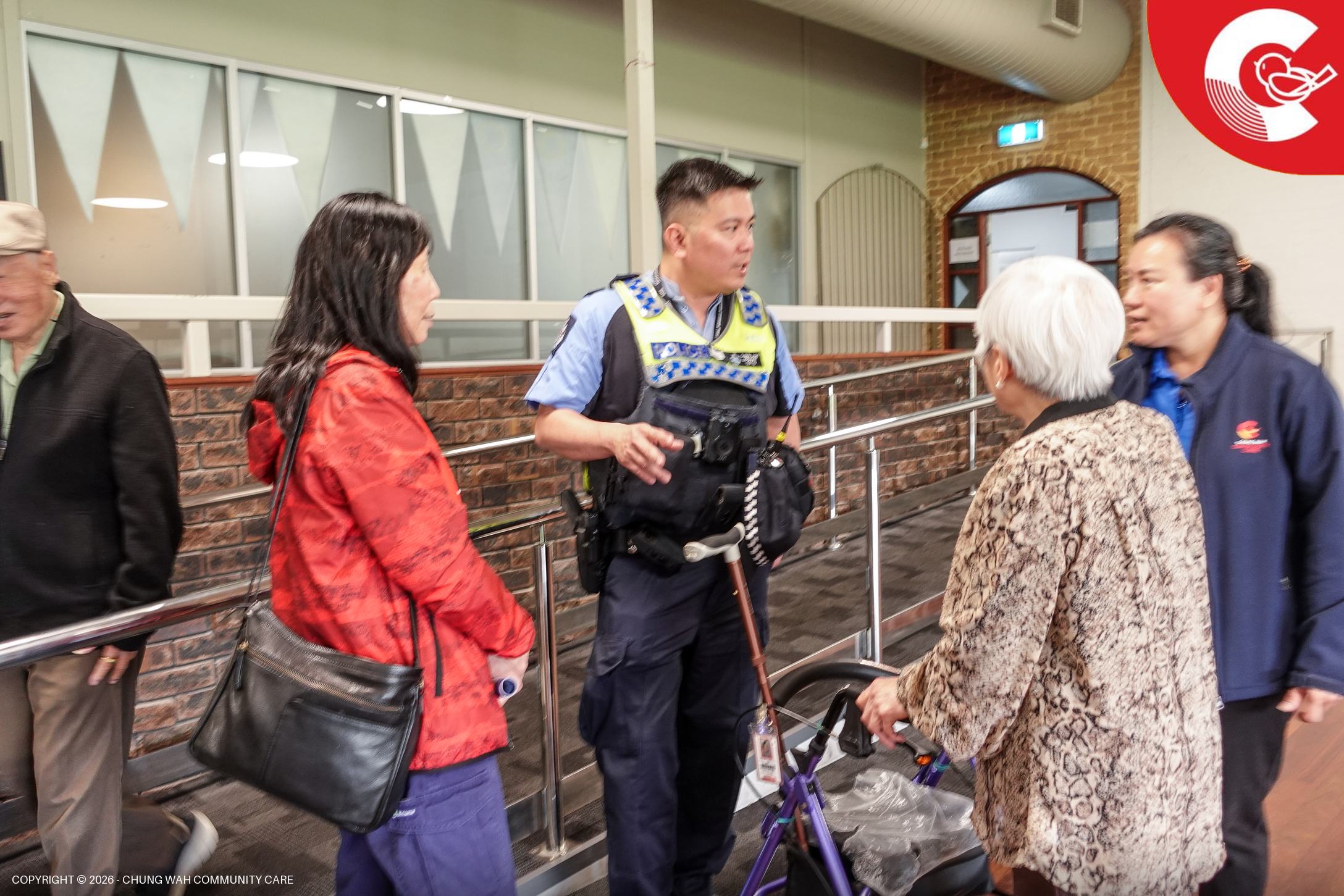
Representatives from the WA Police Force then delivered a further presentation on online safety, helping participants better understand digital risks and learn how to protect their personal information and online accounts.
For older people, online safety education is about more than simply recognising scams. It is also about building the confidence and judgement needed to make informed decisions and protect themselves online.
Some older community members may be less familiar with English-language websites, online payment processes or digital platforms. When an urgent message appears to come from a bank, government agency or even a family member, it may not always be easy to recognise whether it is genuine.
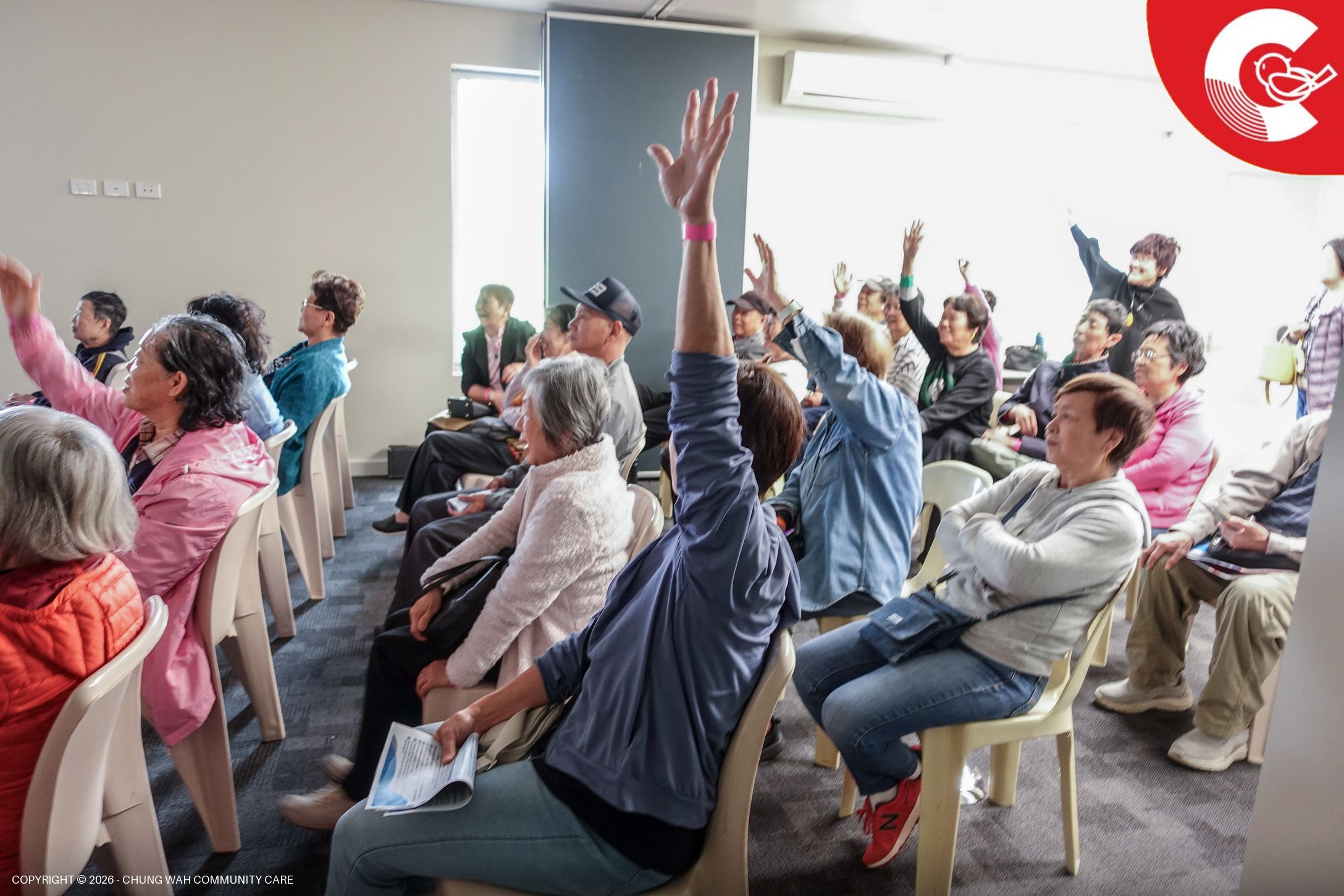
Participants welcomed the opportunity to learn more about these challenges.
“This workshop has deepened my understanding of online safety and made me realise just how powerful artificial intelligence has become,” one participant shared.
Another participant reflected on the practical value of the session:
“At least now we can better protect ourselves!”
Many participants also expressed interest in attending similar activities in the future to continue developing their digital skills and awareness of scams.
Online scams can affect anyone, and preventing them requires a shared effort across the community. Through this event, CWCC aimed to raise awareness of online risks and equip older people with practical strategies to recognise scams and better protect themselves in an increasingly digital world.
Technology should be a tool that makes life easier, not a source of fear or risk. Helping older people stay safe online is another important step towards building a safer, more inclusive community.